
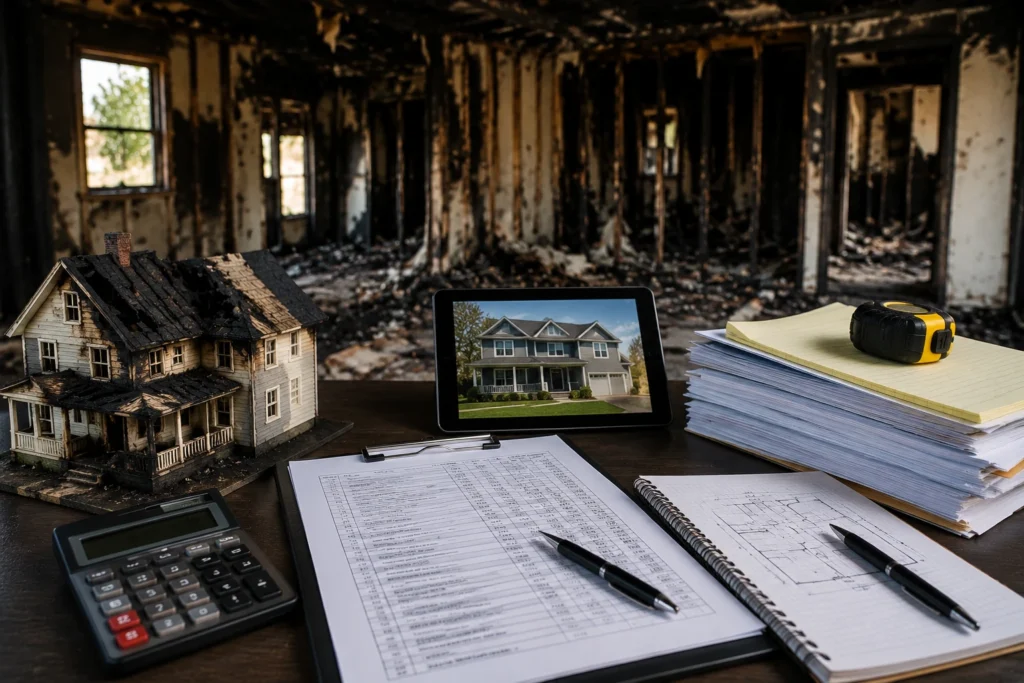
A house fire is not just an event. It is a reset button nobody asked for. One moment everything feels normal, and the next, you’re standing in front of damage that changes everything. This is exactly where understanding the Total Loss Fire Claim Process becomes essential. Not as theory. Not as paperwork. But as a real, practical roadmap for recovery when everything feels uncertain. Because once a loss is declared total, the insurance process shifts. It becomes more structured. More technical. And far more consequential than most homeowners expect. This guide breaks it down step by step, with clarity, detail, and real-world application. No fluff. Just what matters.
What a Total Loss Actually Means in Insurance Terms
A total loss does not always mean everything is reduced to ash. That’s a misconception. Insurance companies rely on financial and structural thresholds, not emotion. A home may be classified as a total loss when:
- Repair costs exceed replacement value
- Structural integrity is compromised beyond safe repair
- Building codes require full reconstruction
- Damage affects multiple interconnected systems (electrical, framing, plumbing)
The Total Loss Fire Claim Process begins the moment this classification becomes likely not when the homeowner realizes it emotionally, but when the insurer begins evaluating numbers. And that difference matters more than most people think. Because from this point forward, everything becomes documentation-driven.
Why Timing Immediately After the Fire Matters
The first 24–72 hours after a fire feel chaotic. They are. But this window sets the tone for the entire claim.
Here’s what needs to happen early:
- Ensure safety and wait for official clearance
- Contact your insurance carrier immediately
- Request Additional Living Expenses (ALE) support
- Avoid discarding damaged items too quickly
- Capture photos or video if conditions are safe
In early claim stages, small decisions carry long-term consequences. The Total Loss Fire Claim Process is already in motion the moment the insurer is notified. Not when paperwork is signed. And that surprises many homeowners. Filing the Fire Insurance Claim Correctly Once things stabilize, the formal claim begins. This is where structure takes over emotion.
You will typically need:
- Policy information
- Fire incident report
- Proof of ownership or occupancy
- Preliminary inventory of damaged items
- Any available visual documentation
At this stage, clarity matters more than volume. Short, factual statements work best. Avoid speculation. Avoid guessing. Because the Total Loss Fire Claim Process is shaped early by how information is presented. Not just what is presented.
How Insurance Companies Evaluate Fire Damage
Once the claim is filed, insurers begin a structured investigation.
They typically assign:
- Claims adjusters
- Fire origin investigators
- Structural engineers
- Contents valuation specialists
Their goal is to answer three questions:
- What caused the fire?
- Is the property truly a total loss?
- What is the accurate financial value of damage?
Everything is tested. Everything is verified. No assumption is accepted without evidence. And that is where the process becomes highly technical.
Understanding Coverage Before Moving Forward
Insurance policies often appear simple at first glance. They are not.
Key coverage components include:
- Dwelling coverage (structure replacement)
- Personal property coverage (contents)
- Additional Living Expenses (temporary housing)
- Code upgrade coverage
- Replacement Cost vs Actual Cash Value
The difference between ACV and RCV is often significant.
Sometimes dramatically so. The Total Loss Fire Claim Process depends not only on damage but on how your policy defines value. And those definitions are everything.
How Settlement Values Are Calculated
Once total loss is confirmed, valuation begins. This is a structured financial breakdown.
Insurers consider:
- Cost per square foot for rebuild
- Depreciation based on age and condition
- Local labor and material costs
- Policy limits and exclusions
- Salvage value of remaining materials
- Contents inventory valuation
A simplified breakdown looks like this:
| Category | Description | Impact |
| Dwelling | Structure rebuild cost | Highest value driver |
| Contents | Personal belongings | Secondary valuation |
| ALE | Temporary housing costs | Time-limited support |
| Code Upgrades | Compliance requirements | Often disputed |
At this point, the Total Loss Fire Claim Process becomes a financial reconstruction exercise. Not of memories. But of measurable value.
The Philosophy Behind Insurance Decisions
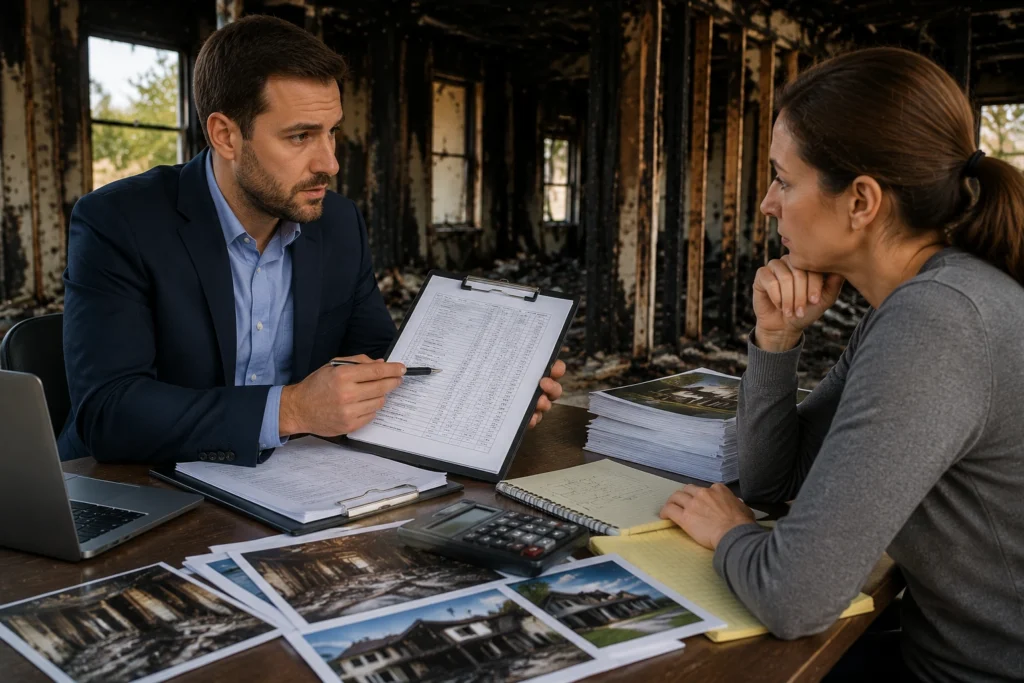
Insurance is not only financial it is epistemological. It depends on how knowledge is established, verified, and justified.
That concept is explored here:
Epistemology (Theory of Knowledge)
Why does this matter in a fire claim?
Because insurers don’t pay based on belief. They pay based on validated evidence.
Photos. Reports. Estimates. Documentation. Knowledge becomes currency. And the stronger your evidence, the stronger your position in the Total Loss Fire Claim Process.
Why Disputes Commonly Arise in Fire Claims
Even when claims are valid, disagreements happen.
Common issues include:
- Underestimated rebuild costs
- Disputes over depreciation
- Missing code upgrade allowances
- Contents valuation differences
- Disagreements about cause or scope
These disputes don’t always signal wrongdoing. Often, they reflect different valuation methods. The insurer protects cost control. The homeowner seeks full recovery. And those goals don’t always align.
Documentation: The Hidden Power in Every Claim
Documentation is the foundation of everything.
Strong documentation includes:
- Pre-loss photos or videos
- Receipts for major purchases
- Digital home inventories
- Contractor estimates
- Fire department reports
- Communication records with insurers
Weak documentation leads to estimation. Strong documentation leads to negotiation power. The Total Loss Fire Claim Process rewards preparation more than reaction. Every time. No exceptions.
Why Public Adjusters Often Change Outcomes
Most homeowners are not prepared for the complexity of a total loss claim. That is where professional support becomes valuable.
A public adjuster can:
- Review and interpret policy coverage
- Build full damage assessments
- Prepare detailed rebuild estimates
- Negotiate with insurance companies
- Identify missed or undervalued claim items
This support does not replace the process. It strengthens your position within it.
How to Strengthen Your Claim Position Early
Preparation is not complicated. But it is consistent.
Here are practical steps:
- Store digital backups of home photos
- Keep receipts for major purchases
- Maintain written communication logs
- Request written explanations for estimates
- Get independent contractor opinions early
Small actions create large leverage. And in the Total Loss Fire Claim Process, leverage matters. More than most people realize.
Timeline: What the Process Usually Looks Like
While every claim is different, patterns exist.
A typical timeline includes:
- Week 1–2: Claim filing and inspection
- Week 2–6: Investigation and evaluation
- Week 6–10: Valuation review and adjustments
- Month 2–4: Negotiation and settlement finalization
- Month 3+: Payment processing and closure
Delays usually occur due to documentation gaps or valuation disagreements. Not randomness. Process friction.
Rebuilding or Moving Forward After Settlement
Once settlement is approved, decisions shift again.
Rebuilding involves:
- Contractor selection
- Permit approvals
- Compliance with updated codes
- Budget oversight
- Construction timelines
Relocation involves:
- Market research
- Financial redistribution
- Insurance coordination
- Emotional adjustment
Both paths require planning. Neither is simple. And both are connected to the Total Loss Fire Claim Process, even after it formally ends.
Negotiation Is a Standard Part of the Process
Negotiation is not conflict. It is procedure.
Common negotiation elements include:
- Independent cost assessments
- Supplemental claims
- Contents valuation revisions
- Code compliance adjustments
- Depreciation disputes
The Total Loss Fire Claim Process often involves multiple review cycles. That is normal. Not unusual.
Specialized Roles in Complex Claims
Insurance claims involve multiple technical professionals.
These include:
- Structural engineers
- Contents evaluators
- Insurance adjusters
- Code compliance specialists
In more complex scenarios, additional roles appear. One example is the Public Water Claim Adjuster, who focuses on water-related damage coordination that may overlap with fire suppression effects. Different specialties. Same system. Each plays a specific role in claim accuracy.
Water and Fire: How Claims Overlap
Fire damage is rarely isolated. Water used to extinguish fires often creates secondary damage:
- Structural weakening
- Mold development
- Electrical system failures
- Flooring and insulation saturation
This overlap complicates valuation. It also expands claim scope. Understanding this interaction improves navigation of the Total Loss Fire Claim Process.
Common Mistakes Homeowners Make
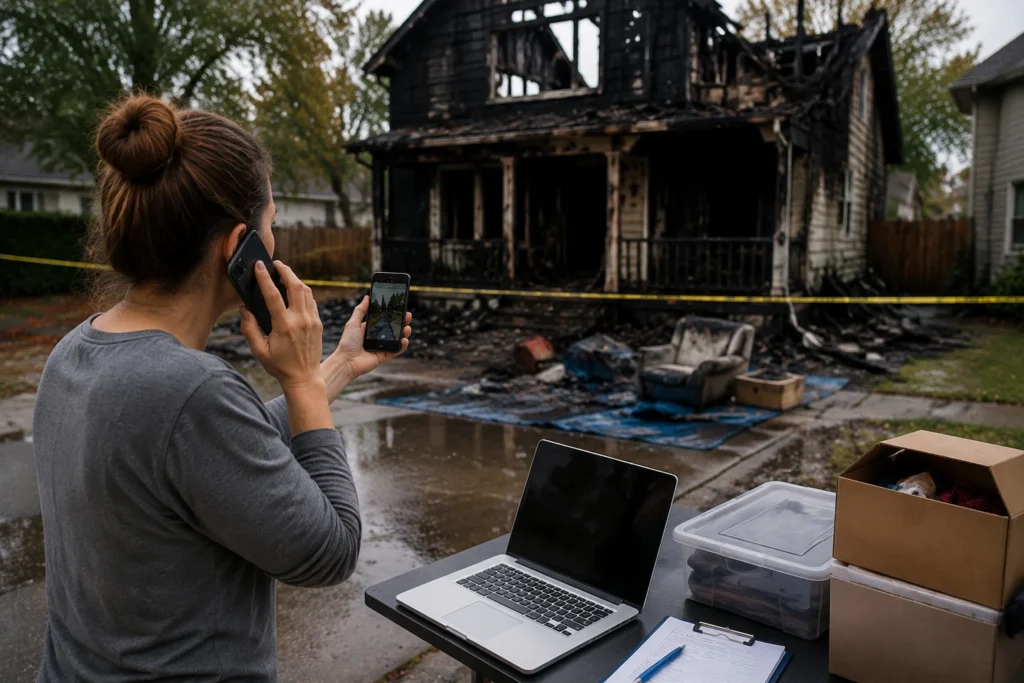
Many setbacks are preventable.
Common mistakes include:
- Discarding damaged items too early
- Accepting initial estimates without review
- Failing to document contents properly
- Delaying communication with insurers
- Overlooking policy exclusions
Each mistake reduces negotiating strength. And often delays recovery.
Final Settlement Process Explained
Final settlement is not a single step.
It is a sequence:
- Final valuation agreement
- Deductible application
- Mortgage company coordination
- Payment release
- Claim closure documentation
Even at this stage, review matters. Because errors can still be corrected before final closure.
Emotional Recovery and Financial Stability
Recovery is not only structural. It is emotional and financial.
Homeowners often experience:
- Decision fatigue
- Financial uncertainty
- Delayed closure feelings
- Stress from ongoing negotiations
This part of the journey is rarely discussed. But it is real. And it deserves acknowledgment.
Final Perspective: Understanding the Process Fully
The reality is simple. Fire destroys quickly. Insurance recovery does not. The Total Loss Fire Claim Process is structured, detailed, and evidence-driven. It is not designed to be emotional. It is designed to be precise. And that precision is what shapes outcomes. In the end, recovery depends on three things: Preparation. Documentation. Persistence.
Not luck. Not guesswork. And in cases like those experienced in Mansfield, Texas, USA, homeowners often discover that the strongest claims are not the loudest they are the most organized. Because structure wins over confusion. Every time.
FAQs
A total loss fire claim happens when the insurance company determines the property is damaged beyond repair or rebuilding is not cost-effective.
It typically takes 2–4 months, but delays can occur depending on inspections, documentation, and policy disputes.
Ensure safety first, contact your insurer, document damage if possible, and avoid disposing of any damaged items too quickly.
It is based on rebuild costs, depreciation, policy limits, and the value of personal belongings listed in your claim.
Yes, homeowners can dispute offers by providing independent estimates, documentation, or hiring a public adjuster for support.
ACV pays depreciated value, while RCV covers the full cost of replacing damaged property with new materials.
It is not required, but a public adjuster can help maximize your settlement and handle negotiations with the insurance company.
Most policies cover dwelling replacement, personal belongings, and temporary housing under Additional Living Expenses (ALE).
Common mistakes include discarding evidence too early, accepting the first offer, and not documenting losses properly.
Yes, once the settlement is finalized, you can rebuild or relocate depending on your financial and personal situation.