
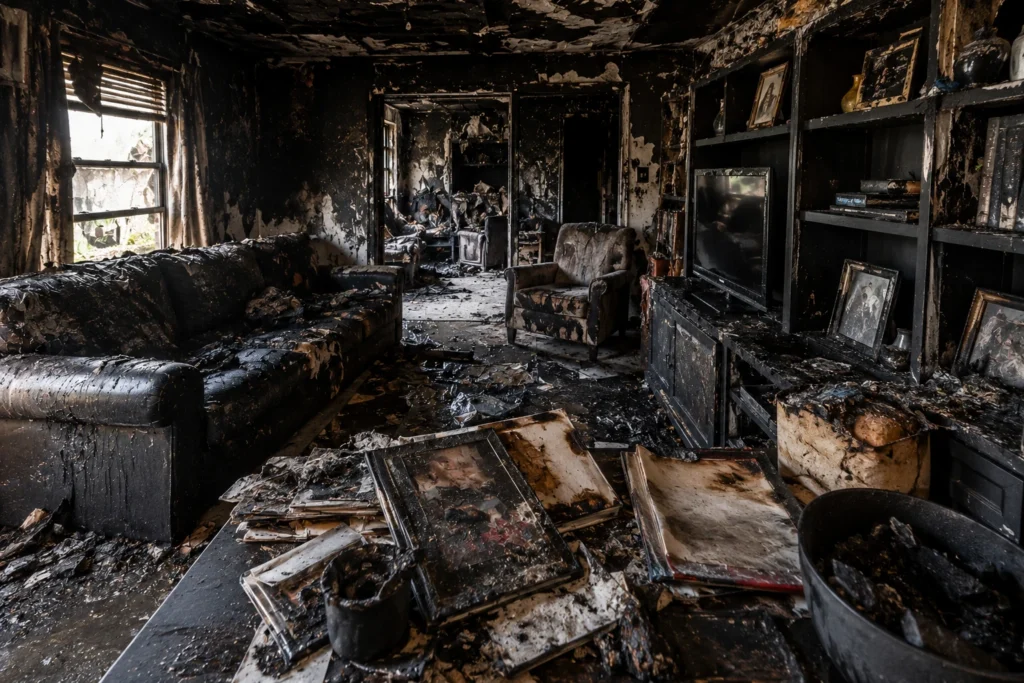
A house fire changes everything in an instant. Even after the flames are extinguished, homeowners face another difficult challenge: deciding whether damaged belongings should be cleaned or replaced. Contents Cleaning vs Replacement After a Fire is one of the most important aspects of an insurance claim because personal belongings often represent years or even decades of memories and financial investment. Understanding how insurance companies evaluate damaged property can help you make informed decisions, protect your rights, and maximize your settlement. Whether you’re beginning the recovery process or reviewing an insurer’s estimate, knowing how these decisions are made can prevent costly mistakes. For homeowners in Mansfield, understanding this process can make an enormous difference during recovery.
Fire damage is rarely limited to what was directly touched by flames. Smoke travels through walls, vents, closets, and cabinets. Soot settles on nearly every surface. Water used to extinguish the fire creates additional problems, while lingering odors can penetrate materials that appear untouched. Suddenly, your furniture, clothing, electronics, artwork, and family keepsakes may all become part of one complicated insurance claim. That complexity is exactly why contents claims deserve careful attention. Insurance adjusters, restoration companies, and homeowners often have different opinions about whether an item can realistically be restored. One side may recommend cleaning because it costs less. The other may argue that replacement is necessary because contamination remains or functionality has been compromised. Understanding the reasoning behind each recommendation gives you a much stronger position during negotiations.
The goal isn’t simply to restore your belongings. It’s to ensure your property is safe, functional, and free from hidden damage that could create problems months or even years later. Every decision should balance restoration costs, long-term durability, health concerns, and the terms outlined in your insurance policy. Fire restoration itself combines several scientific disciplines, including chemistry, engineering, and material science. Professionals often rely on advanced methods to evaluate contamination and structural changes that cannot be seen with the naked eye. An interesting concept related to the study of materials and their properties is Tribology.
Understanding Contents Damage After a Fire
Most homeowners immediately focus on burned walls, collapsed roofs, or damaged flooring after a fire. Those are certainly major concerns. However, the contents inside the home frequently suffer damage that extends far beyond visible burn marks. Many belongings survive the flames only to become contaminated by smoke particles, soot deposits, excessive heat, or water saturation. While these items may initially appear salvageable, hidden damage often develops beneath the surface. As a result, determining whether an item should be professionally cleaned or replaced requires much more than a quick inspection.
Fire creates multiple forms of damage simultaneously, including:
- Direct flame damage
- Extreme heat exposure
- Smoke contamination
- Wet soot deposits
- Dry soot deposits
- Water damage from firefighting efforts
- Chemical residue
- Persistent smoke odors
Each type of damage affects different materials in different ways. Consequently, two identical chairs sitting in separate rooms may require completely different restoration approaches depending on their exposure.
Fire Damage Goes Beyond Burned Items
The human eye can be deceiving after a fire. A leather sofa might look relatively clean after a simple wipe-down, yet microscopic smoke particles may have penetrated deep into the cushions. Likewise, wooden cabinets may appear intact while prolonged heat has weakened adhesives holding internal joints together.
Heat also changes the molecular structure of many household materials. Plastics may warp internally before visible deformation appears. Electronics can suffer thermal stress that shortens their lifespan even if they continue functioning immediately after the fire. Metal surfaces may begin corroding due to acidic soot residue, while fabrics can become brittle after prolonged exposure to high temperatures. These hidden effects explain why Contents Cleaning vs Replacement After a Fire requires far more than a visual inspection. Experienced restoration professionals evaluate what cannot easily be seen, not just what appears damaged on the surface.
Smoke Damage Can Spread Throughout the Home
Smoke behaves differently than many homeowners expect. Instead of remaining confined to the room where the fire started, smoke naturally follows airflow throughout the property. HVAC systems, ceiling gaps, electrical outlets, plumbing penetrations, and attic spaces become pathways for smoke migration. Even closed drawers and cabinets may contain soot after a fire.
As smoke cools, microscopic particles settle onto virtually every surface inside the home.
Commonly affected areas include:
- Bedroom closets
- Kitchen cabinets
- Pantry shelves
- Home offices
- Children’s bedrooms
- Laundry rooms
- Garages
- Storage rooms
- Attics
- Finished basements
This widespread contamination means belongings located far away from the flames may still require professional cleaning or replacement.
Why Some Items Look Better Than They Really Are
One of the biggest mistakes homeowners make is assuming appearance equals condition. Unfortunately, many forms of fire damage remain hidden beneath the surface, making certain items unsafe or unreliable even after they look clean.
Examples include:
- Smoke odors trapped inside foam cushions
- Acidic soot continuing to corrode metal finishes
- Moisture trapped inside electronic components
- Fabric fibers weakened by extreme heat
- Microscopic contamination embedded within porous materials
- Wood joints weakened by prolonged heat exposure
- Plastic components that have become brittle
An item may seem perfectly usable immediately after cleaning. Months later, corrosion, discoloration, cracking, or lingering odors begin appearing without warning. This delayed deterioration often becomes a major point of disagreement during insurance claims. While homeowners understandably want their belongings restored whenever possible, insurers and restoration companies must also consider long-term performance, safety, and replacement costs. Understanding these hidden risks helps homeowners participate more confidently in discussions about Contents Cleaning vs Replacement After a Fire and recognize why seemingly minor damage sometimes leads to replacement recommendations.
Why Every Fire Loss Is Different
No two fires create identical damage.
Several variables influence whether belongings can be restored successfully, including:
- The temperature of the fire
- How long the fire burned
- The materials that fueled the fire
- How quickly firefighters extinguished it
- Humidity levels inside the home
- The amount of water used during suppression
- Ventilation throughout the structure
For example, a fast-burning kitchen fire may produce light dry soot that is relatively easy to remove from hard surfaces. On the other hand, a slow-burning electrical fire involving plastics can produce oily soot that penetrates deeply into fabrics, electronics, and insulation, making restoration significantly more difficult. Because every fire behaves differently, restoration decisions should always be based on careful inspections rather than assumptions. What worked successfully for one homeowner may not be appropriate for another, even if the visible damage appears similar.
What Counts as “Contents” in an Insurance Claim?
When discussing Contents Cleaning vs Replacement After a Fire, it’s important to understand what insurance companies classify as “contents” or personal property. Many homeowners are surprised by just how much is included in this portion of a claim. In general, contents are the belongings you would take with you if you moved. They are not permanently attached to the home and usually fall under your personal property coverage.
Common examples include:
- Sofas and sectionals
- Dining tables and chairs
- Beds and mattresses
- Dressers and nightstands
- Televisions
- Computers and laptops
- Tablets and smartphones
- Kitchen appliances
- Clothing and shoes
- Jewelry and watches
- Artwork
- Family photographs
- Books
- Children’s toys
- Musical instruments
- Home office equipment
- Exercise equipment
- Power tools
- Seasonal decorations
- Luggage
- Curtains and rugs
Although these items may seem ordinary, replacing everything after a fire can quickly become one of the largest expenses in an insurance claim. That’s why a detailed inventory is essential from the very beginning.
Typical Restoration Outcomes
The following table provides a general overview of how different household items are commonly handled after a fire. Every claim is unique, but these examples illustrate typical restoration decisions.
| Contents Category | Usually Cleaned | Often Replaced |
| Hardwood Furniture | ✓ | Sometimes |
| Clothing | ✓ | Sometimes |
| Electronics | Sometimes | ✓ |
| Upholstered Furniture | Often | Sometimes |
| Mattresses | Rarely | ✓ |
| Books | Sometimes | Often |
| Artwork | Sometimes | Sometimes |
| Kitchenware | ✓ | Rarely |
| Children’s Plush Toys | Rarely | ✓ |
| Jewelry | ✓ | Rarely |
Remember that these are only general guidelines. Smoke severity, heat exposure, water damage, contamination levels, and insurance policy terms all influence the final decision.
How Insurance Companies Decide Between Cleaning and Replacement
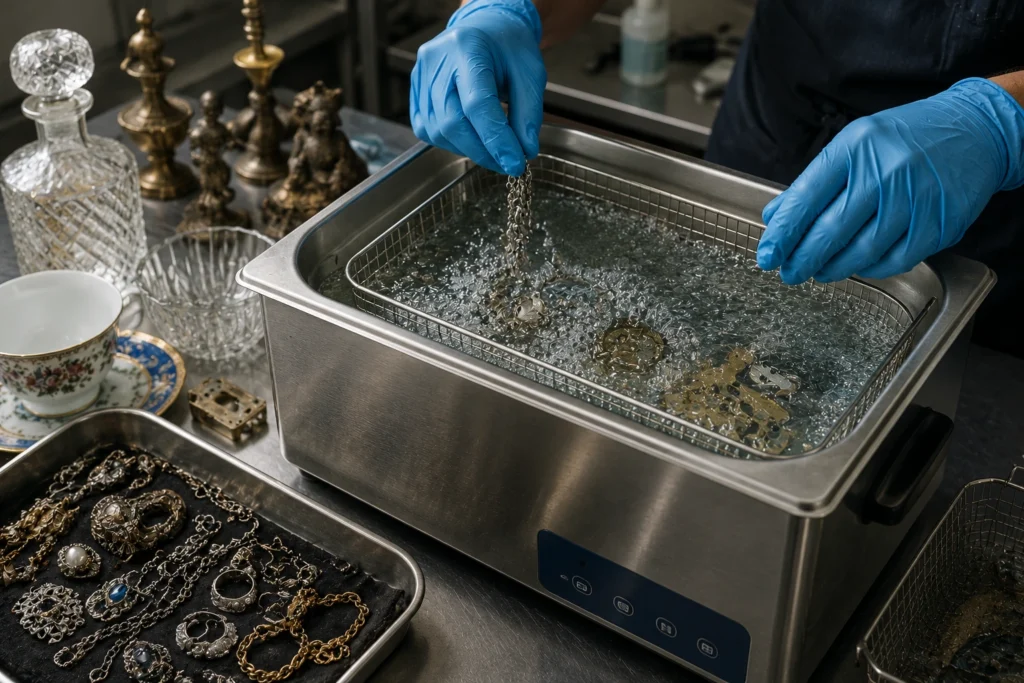
Many homeowners assume an insurance company automatically replaces anything affected by a fire. In reality, the process is much more involved. Insurance carriers evaluate damaged belongings using several technical and financial factors before determining whether professional restoration or replacement is appropriate. Their objective is to restore covered property whenever it is practical and cost-effective while replacing items that cannot safely or reasonably be returned to use. Understanding this evaluation process allows homeowners to ask better questions and recognize when additional documentation may be needed.
Degree of Fire Damage
The first consideration is the severity of the damage itself. Items directly burned by flames usually require replacement because their structural integrity has been permanently compromised. However, belongings affected only by smoke, soot, or moderate heat may still be candidates for restoration.
Evaluators typically examine:
- Burn depth
- Structural condition
- Visible surface damage
- Remaining useful life
- Safety concerns
- Overall functionality
For instance, a handcrafted oak dining table with light smoke staining may respond well to refinishing and deodorization. By comparison, a laminated particleboard cabinet exposed to prolonged heat may have weakened internally, making replacement the safer option.
Smoke Penetration
Smoke doesn’t simply settle on the surface of belongings.
It penetrates porous materials such as:
- Upholstery
- Foam cushions
- Mattresses
- Clothing
- Curtains
- Carpeting
- Unfinished wood
- Paper products
The deeper smoke penetrates, the more difficult it becomes to remove odors and contaminants completely.
Professionals evaluate:
- Odor intensity
- Material porosity
- Surface contamination
- Internal contamination
- Probability of successful restoration
If smoke has deeply penetrated an item, replacement may ultimately provide better long-term value.
Type of Soot
Not all soot behaves the same way. Different fires generate different residues, each requiring specialized cleaning methods.
Common soot types include:
Dry Soot
Produced by fast-burning, high-temperature fires.
Characteristics:
- Powdery texture
- Easier to remove
- Less oily residue
Wet Soot
Produced by slow-burning fires involving plastics or synthetic materials.
Characteristics:
- Sticky texture
- Heavy staining
- Difficult removal
- Strong lingering odors
Protein Residue
Often created during kitchen fires.
Characteristics:
- Nearly invisible
- Extremely persistent odors
- Can discolor painted surfaces over time
Fuel Oil Soot
Typically associated with heating system malfunctions.
Characteristics:
- Thick black residue
- High staining potential
- Extensive deodorization requirements
Correctly identifying soot type helps determine whether cleaning is likely to produce acceptable results.
Water Exposure
Ironically, one of the biggest threats to household belongings arrives after the flames have been extinguished.
Water used during firefighting can damage contents through:
- Swelling
- Rust formation
- Mold growth
- Delamination
- Electrical failure
- Warping
- Adhesive breakdown
Books may swell beyond repair. Wooden furniture may warp. Electronics may suffer irreversible moisture damage. Sometimes water not fire is the deciding factor in whether replacement becomes necessary.
Material Composition
Different materials respond differently to fire damage. Some withstand professional cleaning remarkably well. Others deteriorate rapidly.
Materials that often restore successfully include:
- Stainless steel
- Aluminum
- Solid hardwood
- Glass
- Ceramic
- Porcelain
Materials that present greater challenges include:
- Foam
- Particleboard
- Pressed wood
- Certain plastics
- Synthetic insulation
- Composite materials
Because of these differences, two pieces of furniture with similar smoke exposure may receive completely different restoration recommendations.
Cost Comparison
Economics also plays an important role. Insurance companies compare the total cost of restoration against the cost of replacing the item with one of similar quality.
Cleaning costs may include:
- Transportation
- Pack-out services
- Inventory management
- Specialized cleaning
- Deodorization
- Storage
- Re-delivery
- Final inspection
If restoration costs approach or exceed replacement costs, replacement may become the more practical solution.
For homeowners, however, the decision isn’t always about dollars alone. Family heirlooms, antique furniture, irreplaceable keepsakes, and sentimental possessions may justify restoration even when replacement would cost less. Discussing these priorities early with your restoration contractor and insurance representative can help prevent misunderstandings later. Ultimately, Contents Cleaning vs Replacement After a Fire involves balancing safety, functionality, restoration success, replacement cost, and policy coverage. Every item deserves an individual evaluation rather than a one-size-fits-all approach.
Items That Are Frequently Cleaned Instead of Replaced
Professional restoration companies successfully recover thousands of household items after fires every year. When contamination remains relatively light and structural integrity has been preserved, cleaning can often restore both the appearance and usability of many belongings.
Items commonly restored include:
- Solid wood furniture
- Stainless steel cookware
- Glassware
- Ceramic dishes
- Metal shelving
- Framed artwork with light smoke exposure
- Decorative mirrors
- Window blinds
- Tools
- Outdoor furniture
- Some clothing and linens
Advanced restoration methods allow technicians to remove soot, neutralize odors, and protect finishes without causing additional damage. In many cases, professional cleaning enables homeowners to keep treasured belongings while reducing claim costs.
Common Insurance Disputes Over Contents
Contents claims often become one of the most debated portions of a fire insurance settlement. Unlike structural damage, which is generally easier to measure, personal property involves thousands of individual items with varying ages, conditions, and values. As a result, disagreements are not uncommon.
One of the most frequent disputes involves whether an item should be cleaned or replaced. An insurance company may conclude that professional restoration is sufficient, while the homeowner believes the item has suffered irreversible damage. Both perspectives may rely on expert opinions, but the final decision should be supported by evidence rather than assumptions.
Other common disputes include:
- Low replacement value estimates
- Excessive depreciation
- Missing inventory items
- Partial denial of damaged belongings
- Disagreements over smoke contamination
- Questions about hidden damage
- Salvage value disagreements
- Policy interpretation issues
These disputes don’t automatically mean someone is acting unfairly. Instead, they often arise because fire damage affects materials differently, and determining long-term usability isn’t always straightforward.
To strengthen your position during a dispute:
- Request written explanations for valuation decisions.
- Keep copies of all inspection reports.
- Save photographs and videos of damaged property.
- Obtain independent repair or replacement estimates when appropriate.
- Review your policy carefully before accepting a settlement.
Preparation and documentation remain your strongest tools throughout the claims process.
Why Homeowners Should Never Throw Away Damaged Items Too Soon
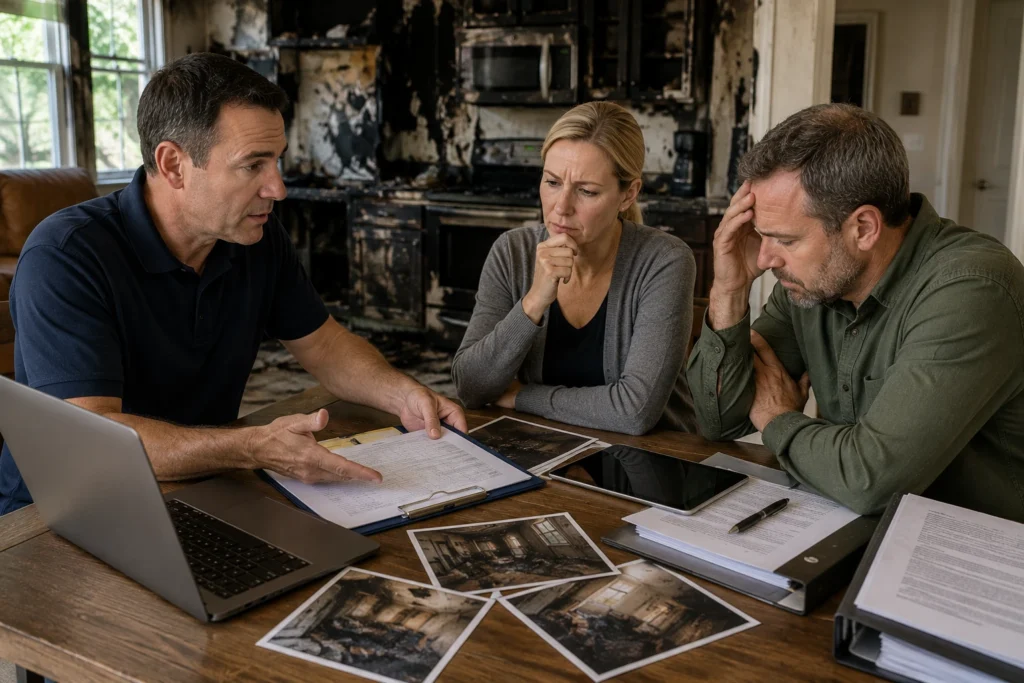
After a fire, most homeowners want to begin cleaning immediately. That’s understandable. Seeing damaged belongings every day can be emotionally exhausting. However, disposing of property too early can seriously complicate your insurance claim. Damaged belongings serve as evidence. Once they are discarded, proving their condition becomes much more difficult.
Before throwing anything away, confirm that the insurance company has:
- Completed its inspection
- Photographed the item
- Recorded its condition
- Approved disposal
- Finalized the valuation
If possible, keep damaged belongings in a secure location until you receive written authorization to remove them. This advice applies even to items that seem obviously destroyed. A burned appliance, smoke-damaged mattress, or heavily stained sofa may still need to be inspected before your insurer completes its evaluation.
In the rush to clean up, it’s easy to overlook how valuable physical evidence can become later in the claim. This is one reason Why a Public Adjuster Changes the Outcome is a concept many homeowners come to appreciate after experiencing a complicated fire loss. An experienced public adjuster helps preserve evidence, organize documentation, and challenge questionable evaluations before important proof disappears.
How a Public Adjuster Can Help Maximize a Contents Claim
Recovering after a fire involves much more than replacing furniture or cleaning smoke-damaged belongings. It requires understanding policy language, documenting losses accurately, and negotiating with the insurance company using reliable evidence.
A public adjuster works exclusively for the policyholder not the insurance company. Their role is to prepare, document, and negotiate the claim with the goal of helping homeowners receive the benefits available under their policy. For complex Contents Cleaning vs Replacement After a Fire claims, professional representation can provide significant advantages.
Independent Documentation
A strong contents claim starts with organized documentation.
Public adjusters often assist homeowners by:
- Preparing comprehensive inventories
- Photographing damaged belongings
- Recording detailed descriptions
- Identifying overlooked losses
- Organizing receipts and supporting records
- Creating room-by-room documentation
The more complete the evidence, the easier it becomes to support the value of the claim.
Accurate Valuation
Many homeowners unintentionally underestimate the value of their possessions.
Think about everything stored inside your home:
- Kitchen utensils
- Small appliances
- Power tools
- Office supplies
- Seasonal decorations
- Clothing
- Hobby equipment
- Sports gear
- Electronics
- Home décor
Individually, these items may seem inexpensive. Collectively, they can represent tens of thousands of dollars. A public adjuster helps ensure these belongings are properly identified and valued.
Policy Interpretation
Insurance policies contain detailed provisions covering:
- Personal property limits
- Replacement Cost coverage
- Actual Cash Value
- Special limits for jewelry
- Collectibles
- Business equipment
- Exclusions
- Deductibles
Understanding these provisions helps homeowners make informed decisions throughout the claims process.
Negotiating with the Insurance Company
Negotiation often becomes necessary when disagreements arise regarding:
- Cleaning versus replacement
- Depreciation
- Smoke contamination
- Hidden damage
- Scope of loss
- Item valuation
Successful negotiations rely on evidence rather than emotion. Inspection reports, contractor estimates, restoration assessments, pricing databases, and policy language all contribute to a stronger position.
Tips for Protecting Your Contents Claim
The days following a fire can feel overwhelming. Nevertheless, taking deliberate steps early can protect your rights and reduce problems later. Here are practical ways to strengthen your claim.
Secure the Property
Take reasonable steps to prevent additional damage.
Examples include:
- Boarding broken windows
- Installing temporary roof coverings
- Locking damaged entrances
- Restricting unnecessary access
Most insurance policies require homeowners to mitigate further damage whenever possible.
Document Everything
Photograph every affected room before moving belongings.
Capture:
- Wide-angle room photos
- Individual damaged items
- Labels
- Serial numbers
- Smoke residue
- Water damage
- Burn patterns
Good documentation supports nearly every aspect of the claim.
Save Every Receipt
Many post-fire expenses may qualify for reimbursement.
Examples include:
- Hotel stays
- Meals
- Temporary housing
- Emergency repairs
- Storage costs
- Laundry services
- Boarding pets
- Cleaning supplies
Keeping organized records simplifies reimbursement requests.
Avoid Cleaning Valuable Items Yourself
Household cleaners are rarely designed for smoke damage.
Improper cleaning may:
- Set permanent stains
- Scratch finishes
- Spread soot
- Increase corrosion
- Destroy valuable evidence
When uncertain, consult restoration professionals before attempting cleanup.
Read Your Insurance Policy
Understanding your policy helps eliminate surprises.
Review sections covering:
- Personal property
- Coverage limits
- Deductibles
- Exclusions
- Deadlines
- Documentation requirements
Knowing your responsibilities early can prevent unnecessary delays.
Keep a Claim Journal
Maintain a written record of:
- Phone calls
- Emails
- Inspection dates
- Claim numbers
- Conversations
- Promises made
- Contractor visits
A simple notebook can become invaluable if questions arise months later.
Fire Recovery in Mansfield: Why Local Knowledge Matters
Recovering after a fire involves more than repairing a damaged home. It also requires coordinating inspections, restoration professionals, contractors, and insurance representatives while keeping the claim moving forward.
For homeowners in Mansfield, working with professionals familiar with local building practices and regional restoration resources can simplify many aspects of the recovery process. Local experience often helps when estimating rebuilding costs, scheduling inspections, and understanding the pace of restoration projects within the community. Every claim is different, but having knowledgeable guidance throughout the process allows homeowners to focus less on paperwork and more on rebuilding their lives.
How Restoration Companies Evaluate Whether an Item Should Be Cleaned or Replaced
One of the most misunderstood parts of Contents Cleaning vs Replacement After a Fire is how restoration professionals decide whether an item can realistically be saved. The process begins with a detailed inspection not a quick visual assessment.
Technicians typically evaluate:
- Visible burn damage
- Smoke penetration
- Heat exposure
- Water saturation
- Structural stability
- Material composition
- Restoration cost
- Replacement value
Every item is photographed, inventoried, and assigned an identification number before restoration begins. This documentation helps maintain accountability throughout the cleaning process and provides valuable evidence for the insurance claim. Electronics usually receive additional scrutiny because smoke particles can settle inside circuit boards and connectors. Even if the device appears to function normally, technicians may recommend testing before declaring it safe for continued use.
Textiles undergo similar evaluations. Clothing, bedding, curtains, and upholstered furniture are examined for odor retention, staining, shrinkage, and fiber damage. In many cases, technicians perform small test cleanings before deciding whether full restoration is likely to succeed.
Many restoration companies also use a pack-out process. Salvageable belongings are carefully packed, transported to a specialized cleaning facility, inventoried, restored, and stored until repairs to the home are complete. Before returning the items, technicians perform a final quality inspection to confirm that soot, odors, and contamination have been successfully removed. When disagreements arise over whether an item should be cleaned or replaced, homeowners should never hesitate to ask questions or request supporting documentation. Understanding the evaluation process makes it easier to participate confidently in claim discussions and advocate for fair treatment.
Final Thoughts
Recovering from a house fire involves far more than repairing walls and replacing roofing materials. Your personal belongings represent years of hard work, memories, and financial investment, making the contents portion of a fire insurance claim one of the most significant aspects of the recovery process. Understanding Contents Cleaning vs Replacement After a Fire helps homeowners make informed decisions, ask better questions, and recognize when restoration is appropriate or when replacement is the safer and more practical option. While modern restoration techniques can successfully recover many belongings, not every item can be returned to a clean, functional, and healthy condition. Smoke contamination, heat exposure, water damage, and hidden deterioration all influence the final recommendation.
Documentation remains the foundation of a successful claim. Detailed inventories, photographs, receipts, serial numbers, and organized records provide the evidence needed to support valuations and resolve disputes. Combined with a thorough understanding of your insurance policy, this documentation places you in a stronger position during negotiations. Whether you’re evaluating furniture, electronics, clothing, family heirlooms, or everyday household items, every decision should be based on facts rather than assumptions. Taking the time to understand Contents Cleaning vs Replacement After a Fire can help you avoid costly mistakes, protect your property, and pursue a settlement that accurately reflects your loss. For homeowners rebuilding after a fire in Mansfield, careful planning, thorough documentation, and experienced guidance can make the recovery process smoother and more manageable. By approaching your claim methodically and advocating for your interests every step of the way, you’ll be better prepared to restore both your home and your peace of mind.
FAQs
Contents cleaning restores salvageable belongings by removing smoke, soot, and odors, while replacement provides new items when restoration is unsafe, impractical, or uneconomical.
Yes, many solid wood, metal, and lightly smoke-damaged furniture pieces can be restored using specialized cleaning and deodorization techniques, depending on the extent of the damage.
Not necessarily. Your insurer will evaluate whether items can be safely restored before approving replacement, and your policy coverage will determine how much is paid.
They consider factors such as fire damage, smoke penetration, soot type, water exposure, material composition, restoration costs, and replacement value.
No. Keep damaged items until your insurance company or public adjuster has documented and approved their disposal to avoid affecting your claim.
Not always. While professional restoration can eliminate odors from many items, heavily contaminated porous materials may continue to retain smoke odors and require replacement.
Mattresses, pillows, smoke-contaminated food, medicines, heavily damaged electronics, and certain upholstered or porous items are commonly replaced rather than restored.
Create a detailed inventory, photograph every damaged item, save receipts, keep communication records, and avoid cleaning or discarding belongings before they’re documented.
Yes. Smoke residue can cause internal corrosion that may lead to failures days or even months after the fire, so professional inspection is recommended.
Consider hiring a public adjuster if your claim is large, the insurer disputes cleaning versus replacement, or you need help documenting and negotiating your contents loss.