
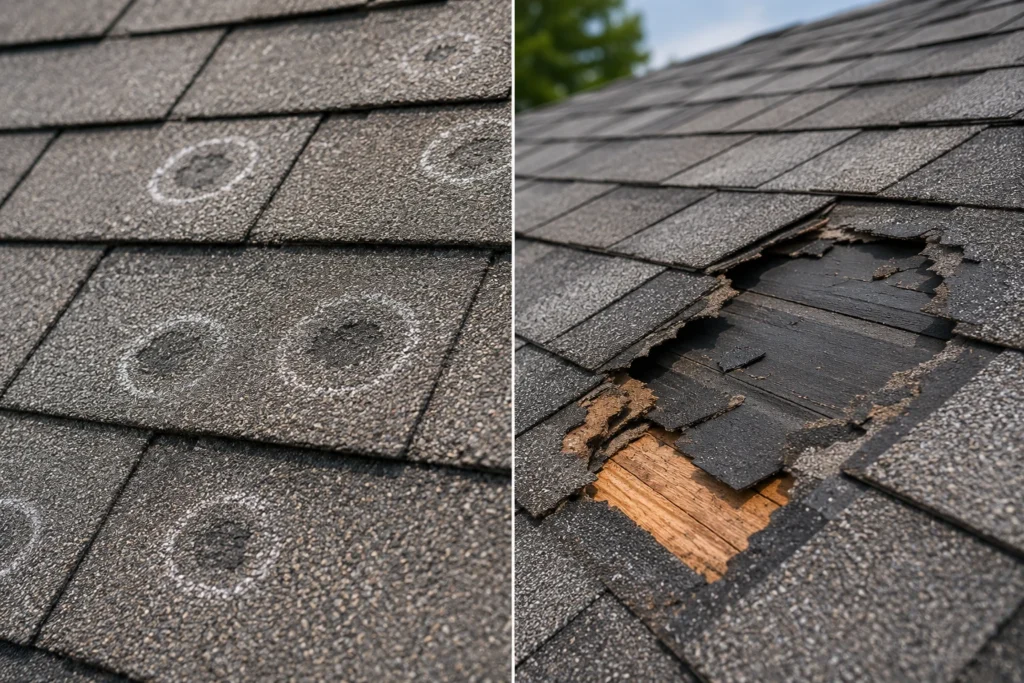
A hailstorm can leave behind more than scattered branches and dented gutters. Sometimes, the most significant damage is the kind you cannot immediately see. That is why understanding cosmetic vs functional hail damage is essential before making repair decisions or filing an insurance claim. While one type of damage may only affect your roof’s appearance, the other can reduce its ability to protect your home from water intrusion and future weather events. Knowing the difference helps homeowners avoid unnecessary expenses while ensuring legitimate storm damage is properly documented. For property owners in Mansfield, where severe thunderstorms and hailstorms are not uncommon, recognizing these distinctions can make the insurance claims process much smoother.
After a storm, it is natural to walk around your property looking for obvious signs of destruction. You might notice dents on the mailbox, leaves covering the yard, or pieces of shingles lying on the driveway. However, many forms of hail damage are far less obvious. In fact, roofs frequently sustain damage that cannot be identified from ground level. Some impacts merely affect the surface, while others weaken the roofing system in ways that eventually lead to leaks, mold, and costly structural repairs.
Engineers who study how surfaces wear over time often rely on principles from Fracture mechanics to better understand how repeated impacts create cracks and material failures. Although homeowners rarely encounter this field of study, the concept explains why even small hailstones can produce hidden damage beneath a roof’s outer surface. That hidden deterioration often becomes the deciding factor during an insurance inspection.
Unfortunately, many homeowners assume every dent or mark automatically qualifies for insurance coverage. Others make the opposite mistake and ignore damage altogether because the roof still appears intact. Neither approach is ideal. Insurance companies typically distinguish between cosmetic damage and functional damage, and that distinction often influences whether repairs, replacement, or no payment at all is appropriate. Understanding these categories before beginning a claim allows homeowners to ask better questions and make more informed decisions throughout the process.
In this guide, we’ll break down exactly what cosmetic and functional hail damage mean, how roofing professionals evaluate storm damage, what insurance adjusters typically look for during inspections, and why early documentation can make a substantial difference if your property has been affected by severe weather.
What Is Hail Damage?
Hail forms inside powerful thunderstorms when strong updrafts carry water droplets into extremely cold parts of the atmosphere. As these droplets freeze, additional layers of ice accumulate around them. Eventually, the hailstones become too heavy for the storm’s updrafts to support, sending them hurtling toward the ground at speeds that can exceed 70 miles per hour depending on their size.
The amount of damage those hailstones cause depends on several factors rather than simply their diameter. Wind direction, storm intensity, roofing material, roof age, installation quality, and even previous weather exposure all influence how a roof responds during a hailstorm. For example, a newer roof installed according to manufacturer specifications may withstand moderate hail with little more than superficial marks. Meanwhile, an older roof with aging shingles may experience fractures, broken seals, or exposed underlayment from the very same storm. That is why no two hail claims are exactly alike.
How Different Roofing Materials Respond to Hail
Every roofing material absorbs impact differently, which explains why inspectors evaluate roofs according to their specific construction.
Asphalt Shingles
Asphalt shingles remain one of the most common residential roofing materials because they balance durability and affordability. However, hail impacts can loosen protective granules, bruise the fiberglass mat beneath the surface, or create fractures that eventually allow moisture to penetrate deeper into the roofing system.
Metal Roofing
Metal roofs generally resist punctures remarkably well. Instead, hail often leaves visible dents or dings across panels. These marks may appear alarming, yet many metal roofs continue performing normally despite cosmetic imperfections. Larger hailstones, however, can damage seams, flashing, or fasteners, creating functional issues that require repair.
Clay and Concrete Tile
Tile roofing provides excellent longevity but reacts differently to concentrated impacts. Hail can chip edges, crack tiles, or break entire sections. Once the waterproof layer beneath becomes exposed, the likelihood of moisture intrusion increases significantly.
Wood Shake Roofing
Wood shake roofs naturally expand and contract as environmental conditions change. Hail impacts may split individual shakes, opening pathways for water infiltration while also accelerating weather-related deterioration.
Slate Roofing
Slate offers exceptional durability but remains relatively brittle under concentrated force. Large hailstones can fracture individual tiles, often requiring specialized replacement techniques to preserve the roof’s overall integrity.
Why Every Hailstorm Produces Different Damage
Homeowners frequently compare their roof with a neighbor’s after a storm. One roof may appear untouched while another requires extensive repairs.
Several variables explain these differences.
- Size and density of hailstones
- Wind speed during impact
- Storm direction
- Roof slope
- Roofing material
- Roof age
- Existing wear
- Previous storm exposure
- Installation quality
Even two homes built side by side may experience dramatically different outcomes depending on these factors. Because every storm behaves differently, visual observations alone rarely provide enough information to determine whether a roof has sustained meaningful damage.
What Is Cosmetic Hail Damage?
The discussion surrounding cosmetic vs functional hail damage usually begins with cosmetic damage because it is the most visible type homeowners notice after a storm.
Cosmetic hail damage refers to changes that affect the appearance of roofing materials without significantly reducing the roof’s immediate ability to protect the home from water. Think of a small dent in a car door. The vehicle still functions, yet its appearance has changed. Roofing systems often experience similar superficial impacts. Although cosmetic damage may seem less serious than structural damage, it should never be dismissed without a professional evaluation. Surface marks occasionally hide more significant issues beneath the visible layer.
Common Examples of Cosmetic Hail Damage
Some of the most frequently observed cosmetic conditions include:
- Small dents on standing seam metal roofs
- Minor dings in gutters and downspouts
- Light surface scuffs on shingles
- Slight displacement of roofing granules
- Cosmetic marks on flashing
- Minor dents on roof vents
- Small blemishes on siding
- Visible imperfections on garage doors
These conditions may affect curb appeal, but they do not necessarily interfere with the roof’s ability to shed water or withstand future weather events.
Does Cosmetic Damage Affect Roof Performance?
In many situations, cosmetic damage has little immediate effect on waterproofing or structural integrity. However, appearances can sometimes be misleading. A dent that initially seems harmless may conceal bruising beneath asphalt shingles. Likewise, repeated impacts across a metal roof may weaken protective coatings over time, increasing the possibility of corrosion in certain environments. This is one reason roofing professionals rarely rely solely on visual observations from the ground. They often inspect multiple areas of the roof closely, checking whether visible marks correspond with hidden material damage.
Can Cosmetic Damage Affect Property Value?
Absolutely. While cosmetic damage may not create leaks, it can influence how buyers perceive a home’s condition. Prospective purchasers frequently associate visible storm damage with future repair costs, even when the roof remains structurally sound. Mortgage lenders, appraisers, and home inspectors may also document noticeable hail impacts during property transactions. As a result, some homeowners choose to repair cosmetic damage even when insurance coverage is unavailable.
What Is Functional Hail Damage?
Functional damage represents the more serious side of the cosmetic vs functional hail damage discussion. Rather than merely changing how the roof looks, functional damage interferes with its ability to perform its intended purpose: protecting the home from water, wind, sunlight, and changing weather conditions. This type of damage often requires prompt repairs because delaying action increases the likelihood of secondary damage inside the home.
Common examples include:
- Cracked asphalt shingles
- Torn roofing membranes
- Fractured fiberglass reinforcement
- Broken tile sections
- Punctured roofing materials
- Damaged flashing around chimneys or vents
- Exposed underlayment
- Open pathways that allow moisture intrusion
Once water penetrates beneath the roof covering, the scope of damage expands quickly. Moisture can soak insulation, stain ceilings, weaken roof decking, encourage mold growth, and eventually compromise structural framing if left unaddressed.
Because of these risks, insurance companies generally pay much closer attention to functional damage during inspections than purely cosmetic imperfections. Distinguishing between the two is central to understanding cosmetic vs functional hail damage, and it often shapes how an insurance claim progresses from inspection to settlement.
Cosmetic vs Functional Hail Damage: A Side-by-Side Comparison
Although the distinction sounds straightforward, many homeowners find the differences easier to understand when the two types of damage are compared directly. The table below highlights the characteristics inspectors and insurance professionals commonly evaluate.
| Feature | Cosmetic Hail Damage | Functional Hail Damage |
| Primary Effect | Changes appearance | Affects roof performance |
| Waterproofing | Usually remains intact | May be compromised |
| Structural Integrity | Typically unchanged | Can be weakened |
| Leak Potential | Low | Moderate to high |
| Repair Urgency | Often less urgent | Should be addressed promptly |
| Insurance Coverage | Depends on policy language | More likely to qualify for coverage |
| Roof Lifespan | Usually unaffected initially | Often shortened if not repaired |
Even with this comparison, every roof tells its own story. Some sections may show only cosmetic dents, while others on the same home have hidden fractures beneath the shingles. That is why professional inspections remain so valuable after severe weather.
How Insurance Companies Evaluate Cosmetic vs Functional Hail Damage
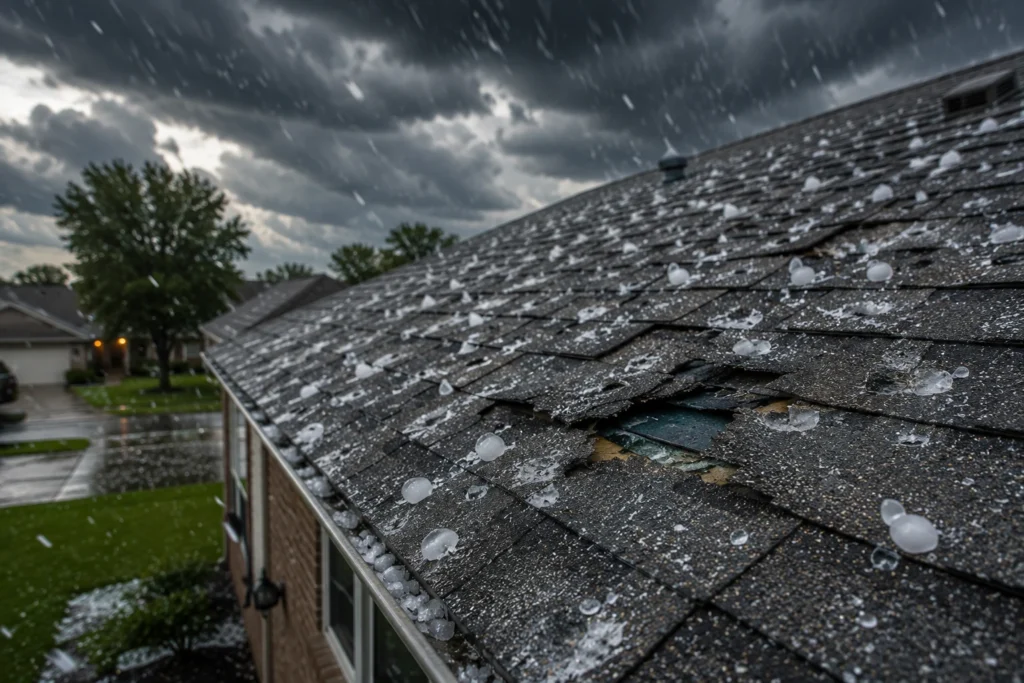
Insurance companies do not simply determine whether hail hit your roof. Instead, they try to establish whether the storm created covered damage under the terms of the policy. That evaluation involves much more than taking a few photographs.
Adjusters often inspect several sections of the roof, looking for consistent impact patterns that match the direction and intensity of the storm. They compare those observations with nearby collateral damage, weather reports, roof age, and maintenance history before reaching a conclusion. The goal is to determine whether the hailstorm reduced the roof’s ability to perform its intended function.
The Roof Inspection Process
A thorough inspection typically follows a systematic approach. The inspector may begin by walking around the property to identify obvious storm damage. Dented gutters, damaged window screens, cracked exterior lighting, and bruised air conditioning fins can all help confirm that hail impacted the property.
Next comes the roof itself. Rather than looking at only one location, inspectors often examine multiple slopes because wind direction influences how hail strikes different sections of the roof. Areas receiving the strongest impacts frequently exhibit the greatest damage.
Close-up examinations may reveal:
- Bruised shingles
- Missing granules
- Fractured fiberglass mats
- Cracked flashing
- Damaged ridge caps
- Torn vents
- Compromised seals around penetrations
Each observation contributes to the overall assessment.
What Adjusters Look For
During a hail inspection, adjusters are generally searching for evidence that demonstrates functional impairment rather than isolated cosmetic imperfections.
Some of the most common indicators include:
- Granule loss exposing asphalt
- Circular bruises that feel soft under gentle pressure
- Fractures extending through roofing material
- Cracked tile edges
- Torn membrane seams
- Damaged flashing
- Open joints
- Water staining beneath roof penetrations
Collateral damage also plays an important role. If gutters, siding, window screens, roof vents, and outdoor furniture all display fresh hail impacts, those findings help establish the timing and severity of the storm.
Why Two Inspectors May Reach Different Conclusions
Homeowners are sometimes surprised when one inspector recommends a full replacement while another suggests only minor repairs. There are several reasons this happens. Experience levels differ. Inspection methods vary. Some professionals rely heavily on visual observations, while others incorporate moisture detection equipment, drone photography, or infrared imaging.
Additionally, roofing materials do not always respond uniformly. Certain impacts that appear insignificant from above may reveal hidden fractures once examined more closely. Because of these variables, obtaining a second opinion may be worthwhile if significant disagreements arise regarding the extent of damage.
Why Insurance Policy Language Matters
One of the most misunderstood aspects of cosmetic vs functional hail damage involves insurance policy wording. Not every homeowner’s insurance policy provides identical protection. Some policies specifically exclude cosmetic damage to certain roofing materials, particularly metal roofing systems. Others provide broader coverage if the cosmetic damage significantly affects market value or if functional issues are also present.
Policy language may address:
- Cosmetic exclusions
- Matching requirements
- Roof depreciation
- Replacement cost versus actual cash value
- Deductibles
- Wind and hail endorsements
These provisions directly influence how claims are evaluated. Reading the declarations page alone is not enough. Understanding the complete policy including endorsements and exclusions helps homeowners avoid unpleasant surprises during the claims process.
Can Cosmetic Hail Damage Be Covered?
The answer depends entirely on the policy. Some homeowners assume cosmetic damage is automatically excluded. Others believe every visible dent guarantees payment. Neither assumption is universally correct. Insurance companies evaluate claims according to the policy contract and the documented condition of the property.
Situations that may influence coverage include:
- The type of roofing material
- Whether protective coatings remain intact
- Evidence of reduced functionality
- Local building code requirements
- Policy endorsements
Because policies vary widely, homeowners should avoid making assumptions before reviewing their coverage.
Signs Your Roof May Have Functional Damage
Functional damage is not always immediately obvious. In many cases, problems develop gradually as rainwater exploits weakened roofing materials.
Warning signs may include:
- Water stains on ceilings
- Damp attic insulation
- Missing or cracked shingles
- Excessive granules collecting inside gutters
- Loose flashing
- Interior mold odors
- Soft spots on roof decking
- Visible daylight entering the attic
- Leaks around skylights or chimneys
Ignoring these symptoms can allow relatively minor storm damage to become a far more expensive repair. Prompt inspections remain one of the best investments homeowners can make following severe hail.
Damage Beyond the Roof
A comprehensive hail inspection extends well beyond shingles. Storms rarely damage only one component of a property. Inspectors commonly evaluate:
Gutters and Downspouts
Fresh dents often provide valuable evidence regarding hail size and impact direction.
Siding
Vinyl, aluminum, and fiber cement siding may display cracks, chips, or impact marks.
Garage Doors
Large flat surfaces frequently reveal dent patterns that help confirm storm severity.
Window Screens
Small tears or punctures may indicate significant hail activity.
Air Conditioning Units
Condenser fins commonly sustain visible impact damage during severe storms.
Fences and Outdoor Structures
Wood fencing, pergolas, storage sheds, and patio covers should also be inspected carefully.
When multiple exterior components exhibit consistent hail damage, the overall documentation supporting an insurance claim becomes much stronger.
Why Professional Roof Inspections Matter
Many homeowners understandably hesitate to climb onto their roof after a storm. That hesitation is wise. Roof inspections involve both safety risks and technical expertise. Professional inspectors know how to distinguish hail damage from normal aging, manufacturing defects, installation issues, and mechanical damage caused by foot traffic or falling branches.
Modern inspection methods often include:
- Drone photography
- Moisture mapping
- Digital measurement software
- High-resolution documentation
- Infrared imaging when appropriate
- Comprehensive written reports
These tools improve accuracy while creating detailed records that may become valuable if questions arise during the insurance process. For homeowners in Mansfield, arranging an inspection soon after a significant hailstorm can preserve important evidence before weathering, repairs, or additional storms make damage more difficult to evaluate.
Perhaps most importantly, professional documentation creates an objective record of the roof’s condition at a specific point in time. Whether the findings ultimately reveal cosmetic issues, functional damage, or a combination of both, accurate documentation allows homeowners to move forward with confidence instead of uncertainty.
Common Reasons Hail Damage Claims Are Disputed
Receiving an insurance settlement is not always straightforward. Even when a severe hailstorm clearly affected an area, disagreements can arise over the extent of the damage or whether the policy covers it. Understanding the most common reasons claims are disputed can help homeowners prepare better documentation before the insurance process begins.
| Reason for Dispute | Why It Matters |
| Normal wear and tear | Insurance covers sudden storm damage, not gradual deterioration. |
| Aging roof | Older roofing materials naturally deteriorate over time. |
| Improper installation | Installation defects may be considered contractor issues instead of covered losses. |
| Poor maintenance | Deferred maintenance can complicate claim evaluations. |
| Late claim reporting | Delays may make it harder to determine when damage occurred. |
| Limited documentation | A lack of photographs or inspection reports weakens a claim. |
| Pre-existing damage | Insurers may argue the damage existed before the hailstorm. |
The best defense against these issues is thorough documentation. Take photographs immediately after the storm, keep maintenance records, and retain inspection reports from qualified professionals. Every piece of evidence helps establish a clearer timeline.
How a Public Adjuster Can Help
Most homeowners file only a handful of insurance claims during their lifetime. Insurance companies, on the other hand, handle claims every day. That difference in experience can make the process feel overwhelming. A public adjuster works on behalf of the policyholder rather than the insurance company. Their responsibility is to evaluate the damage, interpret policy language, and present a well-supported claim.
Services commonly include:
- Conducting an independent property inspection
- Reviewing insurance policy coverage
- Documenting storm-related damage
- Preparing detailed estimates
- Organizing photographs and supporting evidence
- Meeting with insurance representatives
- Reviewing settlement offers
- Assisting with supplemental claims if additional damage is discovered
A public adjuster does not repair the roof. Instead, they focus on documenting the loss and helping ensure the claim reflects the full scope of covered damage. For many homeowners, that independent perspective provides valuable clarity during a stressful situation.
Why Documentation Can Make or Break a Claim
One of the biggest mistakes homeowners make is assuming visible damage will speak for itself. Unfortunately, that is not always the case. Insurance decisions are based on evidence. The more organized and complete your documentation is, the easier it becomes to demonstrate how the storm affected your property.
Consider documenting the following:
- Overall photographs of the property
- Close-up images of roof damage
- Dents in gutters and downspouts
- Damaged siding
- Broken window screens
- HVAC equipment impacts
- Fence or deck damage
- Interior ceiling stains
- Attic moisture
- Dates and times of inspections
- Copies of weather reports
- All communication with the insurance company
Keeping these records together in one folder either digital or physical can save considerable time if questions arise later.
Repair or Replace?
One question homeowners frequently ask after a hailstorm is whether repairs are enough or if the roof should be replaced entirely. The answer depends on several factors. Minor functional damage affecting only a few shingles may be repaired successfully if matching materials remain available and the surrounding roof is still in good condition.
Replacement becomes more likely when:
- Damage is widespread.
- Waterproofing has been compromised across multiple roof sections.
- Roofing materials are no longer manufactured.
- Repairs would leave the roof vulnerable to future leaks.
- Local building codes require broader replacement.
- The roof has reached the end of its service life.
A professional inspection helps determine which option provides the safest and most cost-effective long-term solution.
Mistakes Homeowners Should Avoid After a Hailstorm
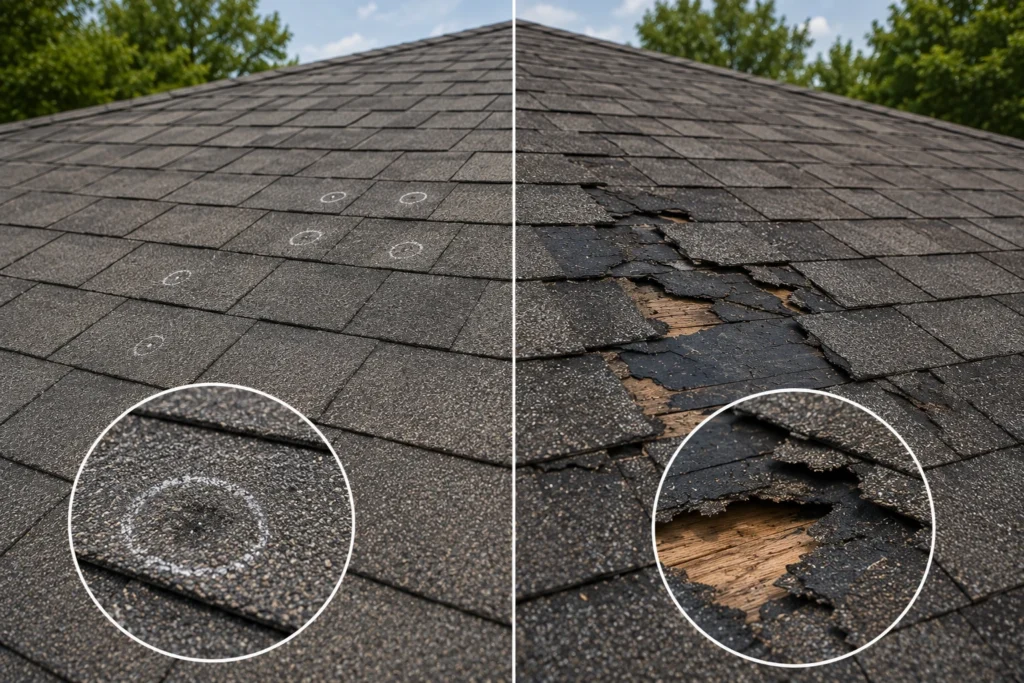
The hours and days following a hailstorm are important.
Avoid these common mistakes:
- Ignoring the roof because no leaks are visible.
- Waiting months before scheduling an inspection.
- Throwing away damaged materials.
- Beginning permanent repairs before documenting the damage.
- Accepting the first settlement without reviewing the inspection findings.
- Assuming every dent qualifies for insurance coverage.
- Climbing onto the roof without proper safety equipment.
Instead, focus on documenting conditions, protecting the property from additional damage, and obtaining professional evaluations before making significant repair decisions.
Practical Checklist After a Hailstorm
Following a simple action plan can help reduce stress while preserving important evidence.
Immediately after the storm:
- Make sure everyone is safe.
- Inspect the property from the ground.
- Photograph visible damage.
- Cover exposed areas if water is entering the home.
- Save damaged materials when possible.
Within the next few days:
- Schedule a professional roof inspection.
- Review your insurance policy.
- Notify your insurance company.
- Keep receipts for emergency repairs.
- Organize all photographs and inspection reports.
Throughout the claim process:
- Maintain copies of all correspondence.
- Record phone conversations and claim numbers.
- Ask questions if policy language is unclear.
- Review settlement documents carefully before approving repairs.
Taking these steps helps create a clear record while reducing the likelihood of misunderstandings during the claims process.
Protecting Your Home for the Future
Although no roof can completely prevent hail damage, homeowners can reduce future risks through routine maintenance. Annual roof inspections help identify worn flashing, deteriorated sealants, loose shingles, and other small problems before severe weather arrives.
Cleaning gutters also improves drainage, reducing the chance that water will back up beneath roofing materials after storms. Tree branches deserve attention as well. Trimming limbs that hang over the roof minimizes the risk of additional impact damage during high winds. Finally, keep records of maintenance and previous inspections. A well-documented maintenance history demonstrates responsible ownership and can become valuable if storm damage is evaluated in the future.
Conclusion
Understanding cosmetic vs functional hail damage gives homeowners the knowledge they need to make confident decisions after severe weather. While cosmetic damage may affect appearance, functional damage can compromise the roof’s ability to protect the home from rain, wind, and future storms. Recognizing that distinction is critical because insurance coverage often depends on whether the damage affects the roof’s performance rather than simply its appearance.
Every hailstorm is different, and every roof responds differently. Age, roofing materials, installation quality, and storm intensity all influence the outcome. That is why relying solely on a visual inspection from the ground can lead to costly mistakes. A professional evaluation provides a clearer understanding of the roof’s actual condition and creates valuable documentation if an insurance claim becomes necessary.
If your property has recently experienced a hailstorm, act promptly. Photograph the damage, review your insurance policy, and arrange for a qualified inspection before problems become more difficult to identify. Homeowners in Mansfield who respond quickly after severe weather are often in a stronger position to protect both their property and their insurance rights. Ultimately, the goal is not simply to repair a roof it is to restore your home’s long-term protection. By understanding cosmetic vs functional hail damage, keeping detailed records, and seeking professional guidance when needed, you can navigate the claims process with greater confidence and make informed decisions that protect one of your most valuable investments.
FAQs
Cosmetic hail damage affects a roof’s appearance, while functional hail damage impacts its ability to protect your home from the elements.
It depends on your policy. Some insurance policies exclude cosmetic damage, while others may provide coverage under certain conditions.
Signs include cracked shingles, exposed underlayment, leaks, damaged flashing, and missing granules that compromise the roof’s performance.
Yes. Minor surface damage can worsen over time due to weather exposure, potentially leading to functional issues.
Yes. A professional inspection can identify hidden damage that may not be visible from the ground.
Damage to gutters, siding, and other exterior components helps confirm the severity and direction of the hailstorm.
Yes. Functional hail damage can weaken roofing materials and reduce the roof’s expected lifespan if left unrepaired.
It’s best to inspect from the ground and leave roof evaluations to professionals to avoid injury and ensure accurate damage identification.
Report potential hail damage as soon as practical after the storm to preserve evidence and meet your policy’s reporting requirements.
Yes. A public adjuster can document damage, review your policy, and help negotiate a fair settlement with your insurance company.