
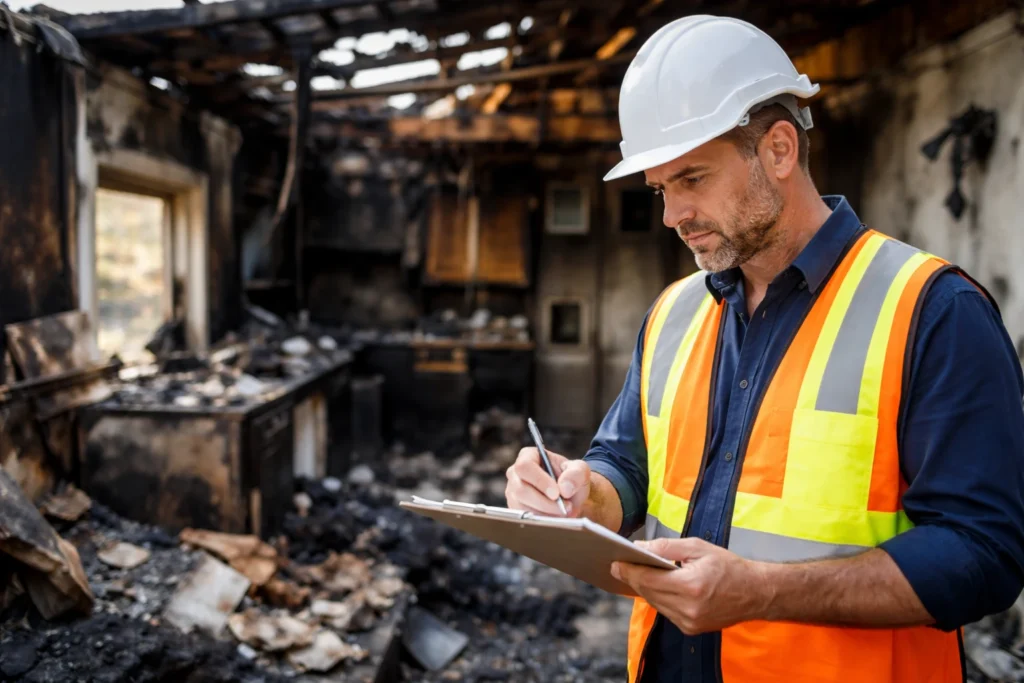
A fire changes everything in an instant. One moment you’re going about your day, and the next you’re standing outside your home, staring at smoke, damage, and uncertainty. It’s overwhelming. It’s emotional. And then almost immediately you’re expected to deal with insurance.
That’s where a fire insurance adjuster comes in. I’ve seen it too many times. Homeowners assume the insurance company will take care of everything. But the truth? The process is complex, and mistakes are costly. This article breaks it all down what a fire insurance adjuster does, why it matters, and how you can protect your claim from being undervalued.
What Is a Fire Insurance Adjuster?
A fire insurance adjuster is a professional responsible for evaluating fire damage and determining how much an insurance company should pay for a claim. Sounds straightforward, right? It’s not.
Their responsibilities include:
- Inspecting fire-damaged property
- Documenting losses (both visible and hidden)
- Estimating repair or replacement costs
- Reviewing your insurance policy
- Negotiating settlement amounts
Here’s the key thing to understand: not all adjusters work for you. And that difference matters more than most homeowners realize.
Types of Fire Insurance Adjusters Explained
Not every fire insurance adjuster has your best interests in mind. Let’s break it down.
Company (Staff) Adjusters
- Employed directly by the insurance company
- Paid a salary by the insurer
- Responsible for protecting the company’s financial interests
They may seem helpful and many are professional but their loyalty is not to you.
Independent Adjusters
- Hired by insurance companies on a contract basis
- Often brought in after large-scale disasters
- Handle multiple claims at once
They don’t work directly for the insurer, but they still represent the insurance company.
Public Adjusters (Your Advocate)
This is where things shift.
A public adjuster works for you the policyholder.
- They represent your interests
- They are paid based on your settlement (contingency fee)
- Their goal is to maximize your payout
At Mansfield Public Adjuster, this is exactly the role we step into. We advocate. We document. We negotiate. And we push for what you’re actually owed.
What Does a Fire Insurance Adjuster Actually Do? (Step-by-Step)
Let’s walk through what happens behind the scenes.
1. Initial Damage Assessment
The adjuster inspects your property. Not just what’s burned but what’s affected.
That includes:
- Structural damage
- Smoke penetration
- Heat impact
- Water damage from firefighting efforts
A surface-level inspection isn’t enough. A skilled fire insurance adjuster looks deeper.
2. Documentation and Evidence Gathering
This step is critical.
Everything must be recorded:
- Photos and videos
- Itemized lists of damaged belongings
- Notes on structural impact
If it’s not documented, it’s easy for it to be overlooked or denied.
3. Estimating the Loss
Now we get into numbers.
Loss estimates include:
- Repair costs
- Replacement values
- Labor and materials
- Code upgrades
Here’s where many claims fall short. Underestimation happens. Often.
4. Reviewing Your Insurance Policy
Insurance policies are not simple documents. In fact, the way clauses are interpreted can feel almost like studying something as intricate as Epistemology you’re trying to understand what counts as “knowledge” or, in this case, “coverage.”
A fire insurance adjuster reviews:
- Coverage limits
- Deductibles
- Exclusions
- Additional living expenses (ALE)
Understanding your policy is the difference between a partial payout and a full one.
5. Negotiating the Claim
This is where real value is created.
Insurance companies:
- Push lower estimates
- Question documentation
- Delay decisions
A skilled fire insurance adjuster pushes back with evidence, strategy, and persistence.
Why Hiring a Fire Insurance Adjuster Matters
Let me be direct.
Handling a fire claim on your own is risky.
Here’s why hiring a fire insurance adjuster makes a difference:
- Higher settlements – Detailed documentation leads to stronger claims
- Less stress – You’re not fighting the insurance company alone
- Faster resolution – Professionals know the process
- Better accuracy – Nothing important gets missed
Think of it this way: insurance companies have experts on their side. Shouldn’t you?
When Should You Call a Fire Insurance Adjuster?
Timing is everything.
You should call a fire insurance adjuster:
- Immediately after the fire
- Before giving recorded statements
- Before accepting any settlement
- If your claim feels undervalued
- If your claim is denied
The earlier you involve an expert, the stronger your position.
Common Mistakes Homeowners Make After a Fire
I see these mistakes all the time. And they cost people thousands.
Avoid These Pitfalls:
- Accepting the first offer too quickly
- Failing to document all damages
- Throwing away damaged items prematurely
- Misunderstanding policy coverage
- Trying to manage the claim alone
One mistake can reduce your payout. Multiple mistakes? That’s a major loss.
How Fire Damage Is Evaluated
Fire damage isn’t just what you can see.
Structural Damage
- Burned framing
- Roof compromise
- Foundation stress
Smoke and Soot Damage
Smoke travels. It embeds into:
- Walls
- HVAC systems
- Furniture
This is often underestimated and expensive to fix.
Water Damage
Firefighting efforts leave behind water damage that can:
- Cause mold
- Weaken structures
- Ruin flooring
Personal Property Loss
This is one of the most overlooked areas.
Here’s a quick breakdown:
| Category | Examples |
| Furniture | Sofas, beds, tables |
| Electronics | TVs, laptops, appliances |
| Clothing | Everyday wear, specialty items |
| Valuables | Jewelry, collectibles |
Every item counts. Every item must be documented.
How a Public Adjuster Maximizes Your Fire Claim
This is where expertise pays off.
A public adjuster:
- Builds detailed inventories
- Uses professional estimating software
- Identifies hidden damage
- Applies policy provisions strategically
- Negotiates aggressively
It’s not just about filing a claim. It’s about building a case.
How to Choose the Right Fire Insurance Adjuster in Mansfield
Not all adjusters are equal.
Here’s what to look for:
Key Criteria:
- Proper licensing
- Fire claim experience
- Local knowledge
- Transparent fees
- Strong client reviews
Questions to Ask:
- How many fire claims have you handled?
- What is your process?
- How do you maximize claims?
- What are your fees?
Choose carefully. This decision impacts your outcome.
Understanding Fees: How Fire Insurance Adjusters Get Paid
Public adjusters typically work on a contingency basis.
That means:
- No upfront cost
- Paid a percentage of your settlement
- If you don’t get paid, they don’t get paid
This aligns incentives. They succeed when you do.
Fire Insurance Claim Timeline: What to Expect
Every claim is different, but here’s a general timeline:
| Stage | What Happens |
| Immediate Response | Damage assessment begins |
| Documentation | Evidence is gathered |
| Review | Policy and estimates analyzed |
| Negotiation | Back-and-forth with insurer |
| Settlement | Final payout issued |
Delays can happen. But the right fire insurance adjuster keeps things moving.
Signs Your Insurance Company May Be Undervaluing Your Claim
Watch for red flags:
- Low initial estimate
- Ignored smoke or water damage
- Slow responses
- Repeated document requests
- Pressure to settle quickly
If something feels off, it probably is.
Why Choose Mansfield Public Adjuster
At Mansfield Public Adjuster, the focus is simple: you.
We:
- Advocate for your full recovery
- Handle the heavy lifting
- Provide clear communication
- Deliver strong negotiation results
This isn’t just about claims. It’s about helping you rebuild properly.
Conclusion
A fire can take a lot from you. Your home. Your belongings. Your sense of normalcy. But your insurance claim shouldn’t take more. A skilled fire insurance adjuster can mean the difference between a frustrating experience and a fair outcome. Between settling quickly and settling correctly.
If you’re dealing with a fire loss, don’t go through it alone. Get the right support. Ask the right questions. And make sure every dollar you’re owed is accounted for. Because when it comes to your recovery every detail matters.
FAQs
A fire insurance adjuster evaluates damage, documents losses, and determines how much compensation should be paid for a fire claim.
No, a public adjuster works for you, while other fire insurance adjusters typically represent the insurance company.
You should hire one immediately after a fire or before accepting any settlement to ensure your claim is properly handled.
Public adjusters usually work on a contingency fee, meaning they take a percentage of your final settlement.
Yes, they often identify overlooked damages and negotiate more effectively, which can lead to higher settlements.
It varies, but most claims take several weeks to months depending on the complexity and negotiations involved.
You can challenge the offer with proper documentation or hire a fire insurance adjuster to negotiate on your behalf.
No, you are not required to accept the initial offer and can negotiate for a fair amount.
Ensure safety first, document the damage, notify your insurer, and consider contacting a fire insurance adjuster right away.