
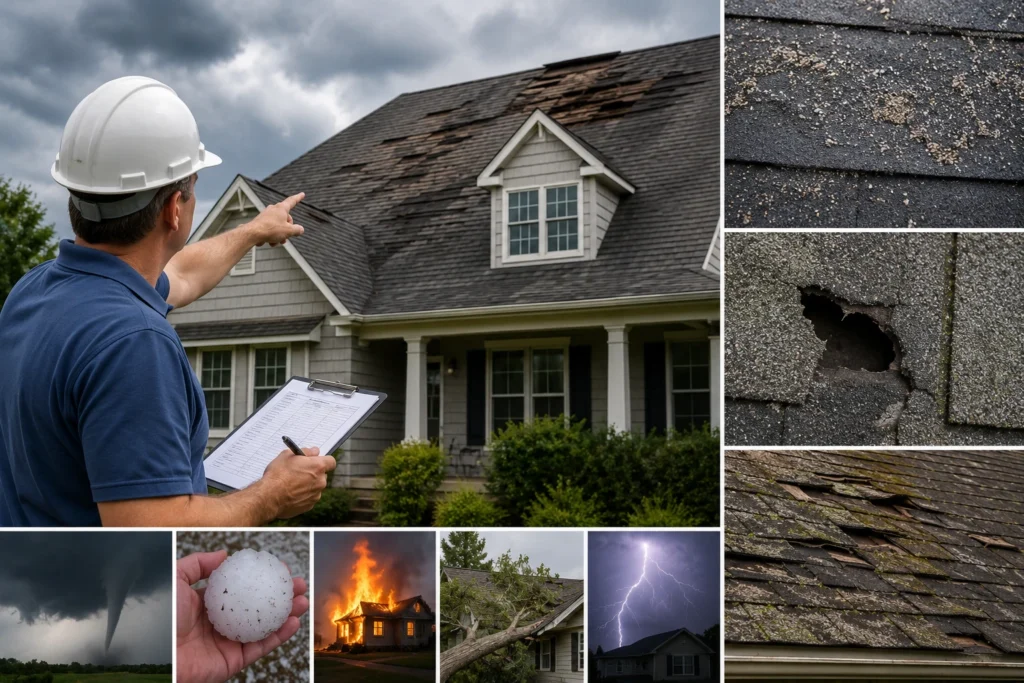
A damaged roof can leave any homeowner feeling overwhelmed. One storm rolls through, shingles scatter across the yard, and suddenly you’re asking the same question thousands of homeowners ask every year: will insurance pay for a full roof replacement? I completely understand why this question matters. Replacing a roof is one of the largest home improvement expenses most people will ever face, and the answer isn’t always as simple as “yes” or “no.” While many homeowners in Mansfield carry insurance specifically to protect against unexpected losses, every claim depends on several important factors, including the cause of the damage, the policy language, and how well the damage is documented.
Homeowners insurance exists to protect against sudden and accidental losses rather than predictable wear over time. That’s an important distinction. If your roof was damaged by hail, strong winds, fire, or a fallen tree, your policy may cover far more than you expect. On the other hand, if your roof has simply reached the end of its lifespan, your insurer may deny coverage altogether.
The challenge is that every roof tells a different story. Two homes on the same street can experience the same storm yet receive completely different claim outcomes because their roofs differ in age, condition, maintenance history, and insurance coverage. Understanding how insurers evaluate these factors can dramatically improve your chances of receiving the settlement you deserve.
This guide explains exactly how insurance companies determine whether they’ll pay for a complete roof replacement, what evidence strengthens your claim, common reasons claims are denied, and practical steps you can take before, during, and after filing. By the end, you’ll have a much clearer understanding of the process and know how to avoid costly mistakes.
The Short Answer: Will Insurance Pay for a Full Roof Replacement?
The short answer is yes but only under the right circumstances.
Insurance may pay for a complete roof replacement when covered damage affects enough of the roofing system that repairs are no longer practical or safe. Policies are designed to restore your home after a covered loss, not to fund routine home maintenance.
Several situations commonly result in full roof replacement approval:
- Severe hail damage across multiple roof slopes
- High winds lifting or removing large sections of shingles
- Fire damage
- Lightning strikes
- Fallen trees or large branches
- Major structural damage caused by covered events
However, approval is never automatic.
Insurance companies carefully investigate every claim before agreeing to replace an entire roof. Their goal is to determine whether the damage resulted from a covered peril or from gradual deterioration that homeowners are expected to maintain themselves.
That’s why the question, will insurance pay for a full roof replacement, always depends on evidence rather than assumptions.
How Insurance Companies Decide Whether to Replace an Entire Roof
Insurance adjusters don’t simply look at a missing shingle and write a check. Instead, they perform a detailed evaluation that considers multiple factors before determining whether repairs or replacement make more financial and structural sense.
Cause of the Damage
The first question an adjuster asks is simple:
What caused the damage?
Covered causes generally include sudden events such as:
- Windstorms
- Hail
- Tornadoes
- Fire
- Falling objects
- Lightning
- Certain types of water damage following covered events
If the damage developed slowly over several years because of aging materials or neglected maintenance, coverage becomes much less likely.
Extent of the Damage
Small isolated damage often leads to localized repairs.
Extensive damage affecting large portions of the roofing system may justify complete replacement instead.
Adjusters typically inspect:
- Number of damaged shingles
- Granule loss
- Roof punctures
- Lifted shingles
- Flashing damage
- Structural movement
- Water intrusion
The greater the overall impact, the stronger the case for replacing the roof.
Roof Age
Older roofs receive additional scrutiny.
Age alone doesn’t eliminate coverage, but insurers often compare the roof’s expected lifespan with its current condition. A 25-year-old roof nearing the end of its service life will likely be evaluated differently than a five-year-old roof damaged during the same storm.
Local Building Codes
Modern construction codes sometimes require upgrades that weren’t necessary when the roof was originally installed.
For example, replacing only one section may violate current code requirements involving underlayment, ventilation, fastening methods, or ice barriers.
These code requirements can influence whether partial repairs remain practical.
Repair Versus Replacement Analysis
Insurance companies generally compare two options:
| Repair Option | Replacement Option |
| Fix damaged sections | Install an entirely new roof |
| Lower immediate cost | Higher initial cost |
| May leave mismatched materials | Creates consistent protection |
| Suitable for limited damage | Better for widespread storm damage |
If repairs cannot restore the roof to a safe and functional condition, replacement becomes far more likely.
Types of Roof Damage That Insurance Commonly Covers
Most homeowners policies cover sudden accidental events rather than gradual deterioration.
Let’s look at the most common examples.
Wind Damage
High winds don’t always remove shingles completely.
Sometimes they loosen adhesive strips, break seals, bend flashing, or lift shingles enough to expose underlying materials to moisture. Even seemingly minor wind damage can allow water to enter over time.
Hail Damage
Hail remains one of the leading causes of roof replacement claims.
Large hailstones can fracture shingles, knock away protective granules, bruise asphalt surfaces, damage flashing, dent vents, and shorten the roof’s lifespan considerably.
Professional inspections often uncover damage invisible from ground level.
Fallen Trees
Strong storms frequently bring down heavy branches or entire trees.
The resulting impact may crack decking, damage framing, destroy shingles, and create immediate openings that expose the home’s interior to rain.
Fire Damage
Even relatively small fires can compromise roofing materials through heat exposure.
Smoke, water used during firefighting, and structural weakening often contribute to replacement decisions.
Lightning Strikes
Lightning doesn’t need to strike the roof directly to cause problems.
Electrical surges, shattered roofing components, or resulting fires may all create covered losses.
Sudden Accidental Events
Insurance generally favors unexpected events.
Examples include:
- Aircraft debris
- Vehicle impacts
- Explosions
- Certain falling objects
- Storm-driven debris
Each claim still requires documentation proving the event caused the damage.
Roof Damage Insurance Usually Will Not Cover
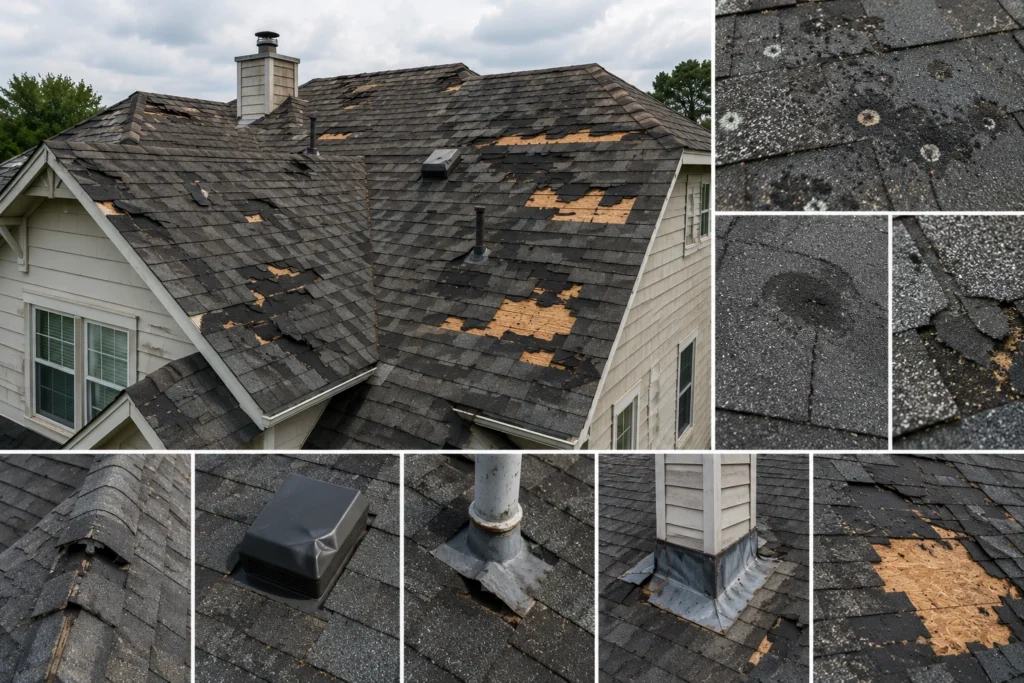
This surprises many homeowners.
Insurance isn’t intended to replace roofs simply because they’re old.
Several situations commonly fall outside standard coverage.
Normal Wear and Tear
Every roof ages.
Sunlight, temperature swings, rain, snow, and changing seasons slowly reduce roofing performance. These predictable changes aren’t considered insurance losses.
Old Age
Eventually every roofing system reaches retirement.
When deterioration occurs naturally over decades, replacement usually becomes the homeowner’s responsibility rather than the insurer’s.
Poor Maintenance
Routine maintenance matters.
Ignoring broken shingles, clogged gutters, deteriorated flashing, or recurring leaks allows preventable damage to spread. Insurance companies may deny claims when neglected maintenance contributed significantly to the loss.
Installation Defects
Improper installation creates long-term vulnerabilities.
Examples include:
- Incorrect nail placement
- Poor flashing installation
- Improper ventilation
- Manufacturer installation errors
These problems generally fall outside standard homeowners insurance.
Gradual Deterioration
Slow deterioration rarely qualifies for coverage.
Examples include:
- Moss growth
- Rot
- Rust
- Material fatigue
- Moisture accumulation over many years
Because these conditions develop gradually, insurers usually classify them as maintenance issues.
Does Partial Damage Ever Lead to a Full Roof Replacement?
Absolutely.
In fact, many approved roof replacements begin with damage affecting only part of the roof.
The reason often involves practical limitations rather than the size of the damaged area itself.
Matching Problems
Manufacturers regularly discontinue roofing products.
If replacement shingles no longer exist, patch repairs may create obvious color and texture differences across the roof.
Some policies and some state regulations recognize that restoring a roof means achieving a reasonably consistent appearance and performance.
Discontinued Roofing Materials
Older roofs present unique challenges.
Even if similar shingles remain available, differences in manufacturing methods, weathering, and color fading can make repairs nearly impossible to blend.
Building Code Requirements
Current construction codes sometimes require broader replacement work once repairs exceed certain thresholds.
For example, replacing one roof section may trigger upgrades involving:
- Underlayment
- Fasteners
- Flashing
- Ventilation
- Deck attachment
These additional requirements can increase repair costs substantially.
When Repairs Stop Making Sense
At some point, patchwork becomes more expensive than replacement.
Insurance companies consider factors such as:
- Number of damaged areas
- Structural integrity
- Remaining roof lifespan
- Long-term performance
- Future leak potential
When repeated repairs would simply delay another failure, complete replacement often provides the better solution.
Replacement Cost Value (RCV) vs. Actual Cash Value (ACV)
One of the biggest surprises during a roof claim has nothing to do with the damage itself.
It involves how your insurance policy values the roof.
Understanding this distinction can dramatically change your financial expectations.
Replacement Cost Value (RCV)
Replacement Cost Value policies generally provide the strongest protection.
Rather than paying only for the roof’s depreciated value, these policies reimburse the cost of replacing the damaged roof with comparable materials, subject to your deductible and policy terms.
Many insurers initially issue a partial payment and release the remaining recoverable depreciation after the replacement work is completed.
Actual Cash Value (ACV)
Actual Cash Value policies calculate payment differently.
Instead of paying today’s replacement cost, insurers subtract depreciation based on age, expected lifespan, and condition.
For example:
| Policy Type | Estimated Roof Cost | Depreciation | Initial Insurance Payment* |
| RCV | $18,000 | Recoverable | Higher after completion |
| ACV | $18,000 | Significant | Lower upfront payment |
*Actual payment depends on deductibles, coverage limits, and policy terms.
Which Policy Offers Better Protection?
Neither policy is universally “better” for every homeowner because premiums and coverage differ.
However, RCV policies generally reduce out-of-pocket costs when a covered event requires a complete roof replacement, while ACV policies often leave homeowners responsible for a larger share of the expense.
Understanding which type of coverage you have before storm season arrives can help you make informed financial decisions and avoid surprises if you ever need to ask, will insurance pay for a full roof replacement?
Modern claim evaluations may also involve technical assessment methods borrowed from fields such as photogrammetry, which uses precise measurements from photographs to document roof conditions and storm damage.
Signs Your Roof May Qualify for Full Replacement
Not every damaged roof requires a complete replacement. However, certain warning signs make it much more likely that an insurance company will determine repairs alone aren’t enough.
The key is understanding what adjusters and roofing professionals look for during an inspection.
Widespread Hail Damage
A few hail strikes scattered across the roof may only require minor repairs. On the other hand, widespread impacts can compromise the protective surface of shingles across multiple slopes.
Common indicators include:
- Significant granule loss
- Bruised or fractured shingles
- Cracked fiberglass matting
- Damaged ridge caps
- Dented roof vents and flashing
When damage affects the roof as a whole instead of isolated sections, replacement becomes a much stronger possibility.
Extensive Wind Damage
Wind can be surprisingly destructive.
Even if shingles remain attached, strong gusts may loosen seals, crease shingles, or expose the underlying roofing system to moisture. Over time, those weakened areas can develop leaks that threaten the home’s interior.
Insurance companies often consider:
- Missing shingles across several elevations
- Lifted or folded shingles
- Torn ridge caps
- Exposed underlayment
- Damaged flashing around chimneys and vents
Multiple Active Leaks
One small leak doesn’t necessarily mean the roof has failed.
Several leaks appearing in different locations, however, may indicate widespread storm damage or structural compromise. Water often travels before becoming visible indoors, so the source of the leak isn’t always directly above the stain on your ceiling.
Structural Damage
Storms don’t only damage shingles.
Large impacts can affect:
- Roof decking
- Trusses
- Rafters
- Fascia
- Soffits
If structural components have been compromised, replacing the roofing system may be the safest and most practical solution.
Damaged Roof Decking
Once moisture reaches the decking beneath the shingles, problems can escalate quickly.
Soft spots, rot, or delamination often require more extensive repairs than replacing surface materials alone. Insurance may include these components if the damage resulted from a covered event.
Storm-Created Openings
Any opening created by wind, hail, or falling debris deserves immediate attention.
Even a relatively small breach allows rain to enter insulation, drywall, electrical systems, and personal property. Preventing additional damage is one of the homeowner’s responsibilities after discovering roof damage.
What the Insurance Adjuster Looks For During an Inspection
A roof inspection is far more detailed than many homeowners expect.
Insurance adjusters aren’t simply checking whether shingles are missing. They’re evaluating whether the damage aligns with the policy’s coverage and whether replacement is justified.
Understanding their process helps you prepare.
Exterior Inspection
The inspection typically begins on the roof itself.
Adjusters examine:
- Overall roof condition
- Damaged shingles
- Flashing
- Valleys
- Ridge caps
- Roof penetrations
- Gutters
- Downspouts
- Ventilation components
They’ll also look for evidence that damage resulted from a recent covered event rather than years of gradual deterioration.
Interior Inspection
Roof damage often leaves clues inside the home.
The adjuster may inspect:
- Ceilings
- Attics
- Insulation
- Interior walls
- Skylights
- Chimney areas
Water stains, mold growth, damp insulation, and visible daylight entering the attic can all support the claim.
Measurements and Documentation
Accurate documentation is essential.
Many adjusters create detailed roof diagrams while recording:
- Roof dimensions
- Slope measurements
- Number of damaged shingles
- Location of impacts
- Photographs from multiple angles
This documentation becomes part of the official claim file.
Weather Verification
Insurance companies often compare your reported damage with historical weather records.
If your claim states hail occurred on a specific date, they’ll likely verify whether storms actually passed through your neighborhood.
Weather reports don’t replace physical evidence, but they often strengthen a well-documented claim.
Roof Age
Expect questions about:
- Installation date
- Previous repairs
- Warranty information
- Prior insurance claims
These details help insurers distinguish recent storm damage from long-term aging.
Documentation That Strengthens Your Roof Claim
Strong documentation can make the difference between a smooth approval process and a frustrating dispute.
The more evidence you provide, the easier it becomes to demonstrate the extent of your loss.
Take Extensive Photographs
Photographs should be taken immediately after the damage is discovered, provided it is safe to do so.
Capture:
- Overall roof views
- Close-ups of damaged shingles
- Interior water damage
- Fallen tree limbs
- Damaged gutters
- Broken skylights
- Debris around the property
Continue taking photos throughout repairs.
Obtain a Professional Roof Inspection
Independent roofing contractors often identify damage homeowners never notice.
A detailed inspection report may include:
- Written findings
- Photographs
- Roof diagrams
- Repair recommendations
- Estimated replacement costs
Professional documentation adds valuable credibility to your claim.
Keep Maintenance Records
Maintenance records demonstrate responsible ownership.
Helpful documents include:
- Previous roof inspections
- Cleaning records
- Minor repair invoices
- Warranty information
- Installation paperwork
These records can counter allegations that neglect caused the damage.
Save Every Receipt
Expenses related to protecting your property may also matter.
Keep receipts for:
- Emergency tarping
- Temporary repairs
- Water mitigation
- Debris removal
- Hotel stays, if covered
- Roofing consultations
Good organization simplifies the claims process later.
Track Communication
Create a dedicated folder containing:
- Claim numbers
- Emails
- Letters
- Inspection dates
- Phone call notes
- Payment summaries
Clear records reduce confusion if questions arise months later.
Why Some Roof Replacement Claims Are Denied
Receiving a denial can be incredibly frustrating.
Fortunately, many denials happen for specific reasons that homeowners can often address with additional documentation or clarification.
Late Reporting
Insurance policies generally require homeowners to report losses promptly.
Waiting several months before filing a claim may allow the insurer to argue that additional weather or deterioration contributed to the damage.
Prompt reporting protects your position.
Insufficient Evidence
Insurance decisions rely heavily on documentation.
Without photographs, inspection reports, or supporting evidence, adjusters may conclude that the available information doesn’t justify full replacement.
Damage Isn’t Covered
Policies differ.
Some exclude certain causes of loss, while others limit coverage based on roof age or policy endorsements.
Always review the policy language before assuming a claim should be covered.
Pre-Existing Damage
Insurance covers new damage not conditions that already existed before the reported event.
If inspections reveal long-standing deterioration, previous leaks, or unrepaired storm damage, those issues may affect coverage.
Maintenance Concerns
Routine maintenance remains the homeowner’s responsibility.
Insurance companies frequently deny claims involving:
- Long-term leaks
- Rot caused by neglected repairs
- Blocked drainage
- Poor ventilation
- Persistent moisture issues
Maintaining your roof regularly helps eliminate these potential objections.
Coverage Limits
Even when damage is covered, policies contain limitations.
Factors that may affect payment include:
- Deductibles
- Policy limits
- Cosmetic damage exclusions
- Depreciation
- Roof settlement provisions
Understanding these provisions before filing helps set realistic expectations.
Can You Appeal a Roof Claim Denial?
Yes and many homeowners successfully do.
A denial isn’t necessarily the final decision. If you believe the insurer overlooked important evidence or incorrectly interpreted your policy, several options remain available.
Request a Second Inspection
Sometimes valuable damage is simply missed during the initial visit.
Requesting a reinspection gives the insurance company another opportunity to evaluate the roof, especially if additional evidence has become available.
Submit Additional Documentation
Supporting information may include:
- Independent contractor reports
- Engineering evaluations
- Additional photographs
- Drone imagery
- Weather documentation
- Building code references
The stronger your documentation, the stronger your appeal.
Obtain an Independent Expert Opinion
Licensed roofing contractors and structural engineers often provide detailed assessments that explain why repairs are inadequate.
Their reports may identify damage not addressed in the original inspection.
Understand Your Policy
Many disputes stem from misunderstandings rather than bad faith.
Review your policy carefully to determine:
- Covered causes of loss
- Exclusions
- Deductibles
- Replacement provisions
- Time limits for appeals
Knowing your rights makes every conversation with the insurer more productive.
How a Public Adjuster Can Help Maximize a Roof Replacement Claim
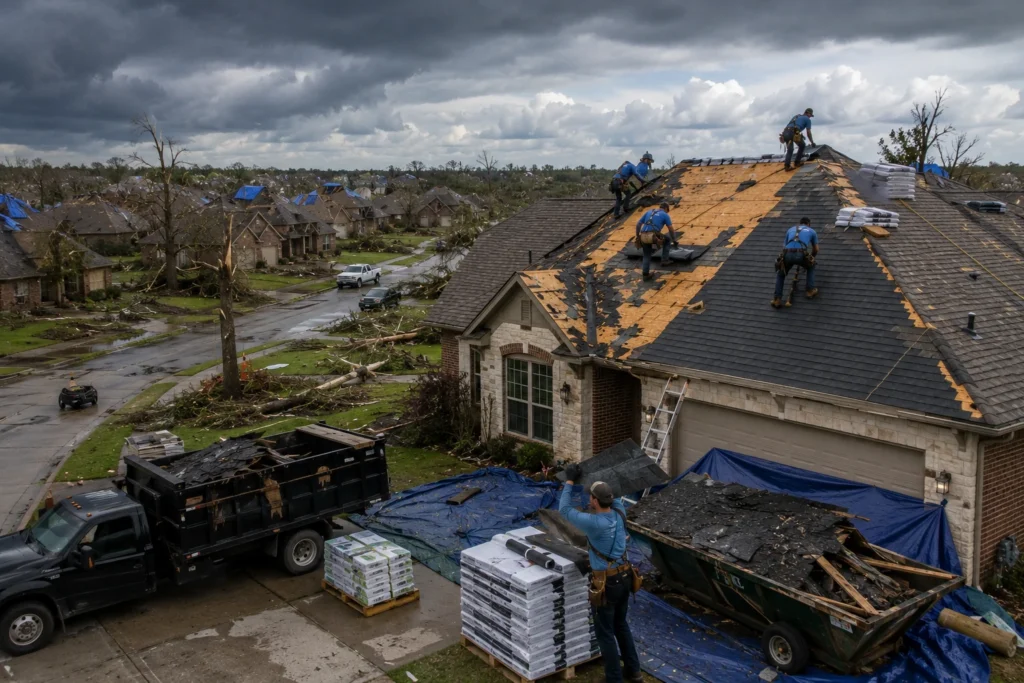
Filing an insurance claim can quickly become overwhelming.
Between inspections, paperwork, repair estimates, and policy interpretation, it’s easy to feel like you’re navigating unfamiliar territory. That’s where a licensed public adjuster can provide valuable assistance.
Unlike the insurance company’s adjuster, a public adjuster works on behalf of the policyholder. Their goal is to document the full extent of the covered damage and help pursue a fair settlement under the terms of the policy.
Reviewing the Insurance Policy
Every policy contains unique language.
A public adjuster carefully reviews:
- Coverage provisions
- Exclusions
- Endorsements
- Deductibles
- Replacement cost terms
- Claim deadlines
This review helps identify benefits that may otherwise be overlooked.
Thorough Damage Documentation
Comprehensive documentation is one of the strongest tools in any property claim.
A public adjuster may prepare:
- Detailed damage inventories
- Photographic evidence
- Measurement reports
- Repair estimates
- Supporting documentation for supplemental claims
Complete documentation helps present a clearer picture of the loss.
Preparing the Claim
Insurance claims involve much more than filling out forms.
Proper claim preparation often includes organizing evidence, estimating repair costs, gathering contractor reports, and presenting information in a way that supports the policyholder’s position.
Negotiating With the Insurance Company
Negotiation is often where experience matters most.
A public adjuster communicates directly with the insurance company, discusses disputed findings, reviews estimates, and works to resolve differences regarding the scope and value of covered damage.
Identifying Overlooked Damage
Some storm-related damage isn’t immediately visible.
During a detailed inspection, a public adjuster may identify issues involving flashing, decking, ventilation components, water intrusion, or other areas that deserve further evaluation. Addressing these items early can help ensure the claim reflects the complete extent of the covered loss.
For homeowners still wondering, will insurance pay for a full roof replacement, experienced guidance can make the process far easier to understand. While no professional can guarantee a specific outcome, careful documentation, thorough preparation, and informed communication often place homeowners in a stronger position throughout the claims process.
Roof Replacement After Severe Storms in Mansfield
Severe weather is part of life in many parts of Texas, and Mansfield is no exception. Strong windstorms, hail, heavy rain, and occasional tornado-producing systems can all place tremendous stress on residential roofing systems. Even when the damage isn’t immediately visible from the ground, storms can weaken shingles, flashing, and underlayment enough to create problems months later.
One of the biggest mistakes homeowners make is assuming their roof escaped damage because there are no obvious leaks. Unfortunately, hail bruising, lifted shingles, and damaged flashing often remain hidden until the next major rainfall. That’s why scheduling a professional roof inspection after a significant storm is a smart investment, even if everything appears normal.
Prompt inspections also create a clearer timeline for insurance purposes. The sooner damage is documented after a storm, the easier it becomes to demonstrate that the loss resulted from a covered event rather than gradual deterioration. Waiting too long can complicate the claims process and make it more difficult to establish when the damage actually occurred.
Some homeowners also search for specialists using terms like Public Water Claim Adjuster when dealing with property losses involving roof leaks and resulting water damage. While water intrusion often follows roof failures, it’s important to work with professionals experienced in evaluating the full scope of property damage and interpreting the specific coverage provided by your homeowners insurance policy.
Tips for Increasing the Chances of Insurance Paying for a Full Roof Replacement
No homeowner can guarantee claim approval.
However, there are several practical steps you can take that significantly improve your chances of receiving a fair evaluation.
Report Damage Promptly
As soon as you discover storm damage, notify your insurance company.
Delays can create unnecessary questions about whether additional deterioration occurred after the original event.
Prevent Additional Damage
Most insurance policies require homeowners to take reasonable steps to protect their property after a covered loss.
Temporary measures may include:
- Installing emergency tarps
- Removing fallen tree limbs
- Covering exposed openings
- Drying affected interior areas
Keep receipts for any emergency expenses.
Document Everything
Documentation remains one of your strongest assets.
Create a file containing:
- Photographs
- Videos
- Contractor reports
- Inspection summaries
- Insurance correspondence
- Repair estimates
- Receipts
- Weather information
The more organized your records are, the smoother the claim process typically becomes.
Schedule a Professional Roof Inspection
Even experienced homeowners can overlook subtle storm damage.
A qualified roofing contractor can identify issues that may not be visible from the ground and provide documentation that supports your insurance claim.
Read Your Insurance Policy
Many homeowners don’t review their policy until after damage occurs.
Take time to understand:
| Policy Feature | Why It Matters |
| Covered perils | Determines whether the event qualifies for coverage |
| Deductible | Affects your out-of-pocket costs |
| Replacement Cost or Actual Cash Value | Influences the amount you may receive |
| Exclusions | Explains situations that are not covered |
| Claim deadlines | Helps ensure you report losses on time |
Knowing these details before filing helps you set realistic expectations.
Don’t Rush to Accept the First Settlement
Insurance estimates aren’t always final.
If you believe important damage was overlooked or the repair scope is incomplete, ask questions. Review the estimate carefully and compare it with independent inspections before agreeing to a settlement.
Maintain Your Roof Year-Round
Routine maintenance benefits homeowners long before a claim is ever filed.
Simple tasks include:
- Cleaning gutters
- Trimming overhanging branches
- Replacing damaged shingles
- Inspecting flashing
- Checking attic ventilation
- Scheduling periodic roof inspections
Good maintenance not only extends the roof’s lifespan but also reduces the likelihood that an insurer will attribute future problems to neglect.
Final Thoughts
So, will insurance pay for a full roof replacement? In many situations, the answer is yes—but only when the damage results from a covered event and the evidence supports full replacement over localized repairs. Storm-related losses caused by hail, wind, fire, falling trees, or other sudden accidents are often covered, while damage caused by aging, wear and tear, or poor maintenance generally is not.
Throughout the claims process, preparation makes a meaningful difference. Prompt reporting, thorough documentation, professional inspections, and a clear understanding of your insurance policy can all strengthen your position. Rather than relying on assumptions, focus on gathering facts and presenting a complete picture of the damage. That approach gives both you and your insurer the information needed to evaluate the claim fairly. If your home has recently experienced severe weather and you’re wondering will insurance pay for a full roof replacement, don’t wait for a small problem to become a costly one. Arrange for a qualified inspection, review your policy carefully, and seek professional guidance whenever questions arise. Homeowners throughout Mansfield who act quickly after a storm are often better positioned to protect both their property and their financial investment for years to come.
FAQs
Yes, if the damage is caused by a covered peril such as hail, wind, fire, or a fallen tree and meets your policy’s requirements.
They evaluate the cause, extent of damage, roof condition, age, and whether repairs can restore the roof safely and effectively.
It may, but older roofs are often subject to depreciation or limited coverage depending on your policy and the cause of the damage.
Yes. Widespread hail damage that compromises the roof’s integrity may justify a complete replacement instead of repairs.
You can request a reinspection, provide additional evidence, or seek an independent professional opinion if you believe more damage exists.
It can vary by insurer and your claims history, but weather-related claims don’t always result in higher premiums.
Yes. A professional inspection can identify hidden damage and provide documentation that supports your claim.
Photos, inspection reports, repair estimates, maintenance records, receipts, and weather reports all strengthen your claim.
In most cases, yes. Your insurance company may recommend contractors, but homeowners are generally free to select their preferred licensed roofer.
A public adjuster can help document damage, interpret your policy, and negotiate with the insurance company if your claim is complex or disputed.