
Water damage is one of the most stressful problems a homeowner can experience. One day your home is perfectly dry, and the next you’re staring at soaked flooring, stained ceilings, or walls that suddenly don’t look quite right. However, not every water loss is viewed the same by an insurance company. Understanding Sudden vs Gradual Water Damage is essential because the distinction often determines how a claim is investigated and whether all or only part of the damage may qualify for coverage. For homeowners in Mansfield, knowing this difference before filing a claim can help avoid misunderstandings, improve documentation, and support a smoother insurance process.
Many people believe that if water damages their home, their homeowners insurance will automatically cover the repairs. Unfortunately, that assumption can lead to disappointment. Insurance policies are built around specific definitions, exclusions, and conditions that distinguish unexpected accidents from damage that develops over time. A burst pipe may be treated very differently than a slow leak hidden inside a wall, even if both ultimately cause thousands of dollars in repairs. Understanding how insurers evaluate these situations helps homeowners make informed decisions immediately after discovering water damage.
Understanding Sudden Water Damage
Most homeowners insurance policies describe covered water losses as “sudden and accidental.” Although wording varies between insurers, the general principle remains the same. The event occurs unexpectedly, without intent, and causes damage within a relatively short period. Because the cause is usually easy to identify, insurers can often establish a clear timeline and determine how the loss occurred.
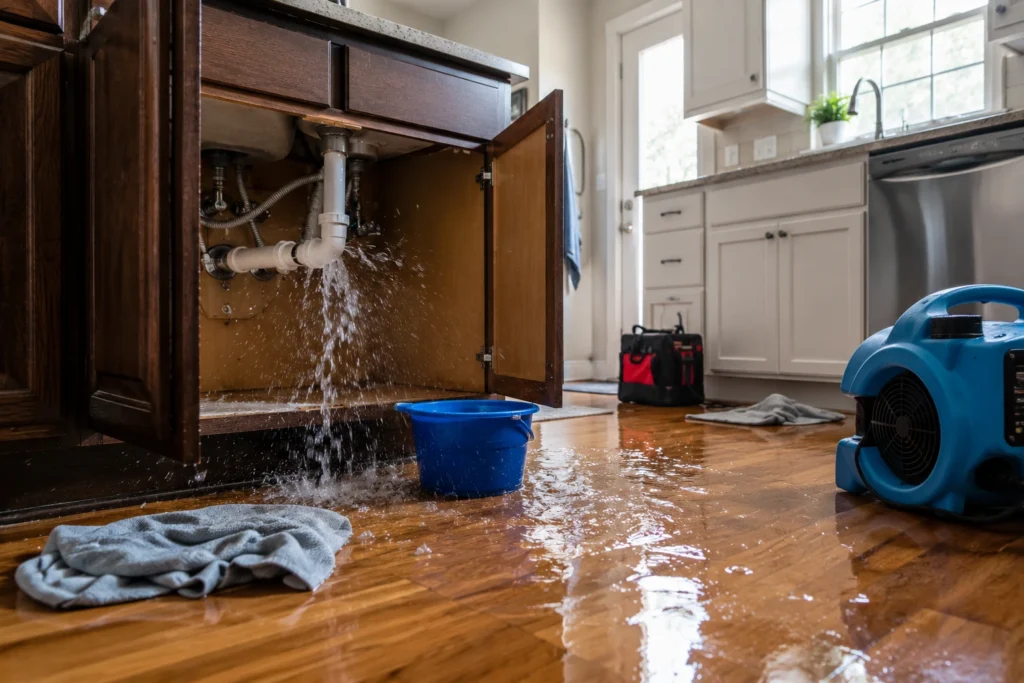
Imagine returning home after work and discovering water pouring from a broken supply line beneath the kitchen sink. Cabinets are saturated, hardwood floors have begun to swell, and water has spread into nearby rooms. The cause is obvious, the damage occurred quickly, and immediate action can be taken to prevent additional loss. This is the type of scenario many people picture when they think about filing a water damage claim. Quick action remains critical. Turning off the water supply, documenting the damage, contacting emergency mitigation professionals, and notifying the insurance company all demonstrate that reasonable steps were taken to reduce further damage. Most policies require homeowners to protect the property after a covered loss, making these early decisions especially important.
Common Examples of Sudden Water Damage
Unexpected plumbing failures happen in many different ways. While every situation is unique, several types of incidents commonly fall under the category of sudden water damage.
Examples include:
- Burst plumbing pipes
- Broken refrigerator water supply lines
- Washing machine hose failures
- Water heater tank ruptures
- Dishwasher supply line breaks
- Toilet overflows caused by mechanical failures
- Frozen pipes that burst after thawing
- HVAC drain pan overflows
- Accidental plumbing disconnections
- Sudden valve failures
Each of these events typically occurs without warning. Homeowners often discover the damage shortly after it begins, allowing restoration efforts to start quickly. That does not automatically guarantee coverage. Insurance companies still investigate every claim to determine the exact cause of the loss, review the homeowner’s policy, and evaluate whether any exclusions apply.
Why Sudden Water Damage Is Often Covered
Insurance is designed to protect against unexpected events rather than predictable deterioration. Because sudden plumbing failures are generally accidental and unforeseen, they often fit within the intended purpose of homeowners insurance coverage.
Several characteristics usually strengthen these claims.
| Characteristic | Why It Matters |
| Unexpected occurrence | Demonstrates the damage was accidental. |
| Clear cause | Makes investigations more straightforward. |
| Immediate discovery | Helps establish a reliable timeline. |
| Prompt reporting | Shows responsible action by the homeowner. |
| Visible damage | Simplifies documentation and inspection. |
Although each policy differs, these factors frequently make sudden losses easier to investigate than damage that develops over an extended period.
Acting Quickly Can Protect Both Your Home and Your Claim
The hours immediately following a water loss often have a significant impact on the outcome of the insurance claim. Waiting too long to remove standing water or delaying temporary repairs allows additional deterioration to occur. In some cases, insurers may question whether portions of the damage could have been prevented with faster action.
When water damage is discovered, homeowners should focus on several immediate priorities:
- Shut off the water source if it can be done safely.
- Turn off electricity in affected areas when necessary.
- Photograph every damaged room before cleanup begins.
- Move valuable belongings away from standing water.
- Contact a professional water mitigation company if extensive drying is needed.
- Notify the insurance company promptly.
- Keep receipts for emergency expenses and temporary repairs.
These simple steps help preserve evidence while reducing the likelihood of additional damage that could complicate the claim later.
Understanding Gradual Water Damage
Unlike sudden plumbing failures, gradual water damage develops slowly over time. Instead of occurring within minutes or hours, moisture may remain hidden behind walls, beneath flooring, or inside ceilings for weeks, months, or even longer before becoming noticeable.
This gradual progression often makes the source much harder to identify. By the time homeowners see staining, warped flooring, or peeling paint, water may have already affected framing, insulation, drywall, cabinetry, and nearby structural components. Because there is rarely a single event that marks the beginning of the damage, insurance investigations become considerably more complex.
Common Causes of Gradual Water Damage
Many gradual water problems begin as relatively minor issues that receive little attention because they remain hidden from view.
Common causes include:
- Slow plumbing leaks inside walls
- Aging pipe fittings
- Leaking shower pans
- Roof seepage around flashing
- Window seal failures
- Foundation moisture intrusion
- Appliance supply line drips
- Condensation from HVAC systems
- Leaking sink drains
- Crawl space moisture
While each leak may appear insignificant initially, prolonged exposure allows moisture to spread through porous building materials, increasing both repair costs and restoration time.
Warning Signs That Homeowners Should Never Ignore
Water has a remarkable ability to travel far from its original source. As a result, the first visible symptom is not always located where the leak actually began.
Watch for warning signs such as:
- Brown or yellow ceiling stains
- Bubbling or peeling paint
- Soft drywall
- Musty odors that persist
- Warped hardwood flooring
- Loose floor tiles
- Mold growth around baseboards
- Damp carpeting
- Condensation inside wall cavities
- Unusually high water bills
These indicators do not automatically mean the damage is extensive, but they do suggest that further investigation is necessary. Addressing problems early often prevents much larger repairs later.
Why Gradual Water Damage Is More Difficult to Investigate
One of the biggest challenges in water damage claims is determining exactly when the damage began. With sudden events, the timeline is usually obvious. With gradual leaks, however, investigators often ask several important questions. How long has the leak existed? Could the homeowner reasonably have discovered it sooner? Was routine maintenance performed? Did additional damage occur because repairs were delayed?
Answering these questions typically requires more than photographs. Insurance companies frequently review plumbing reports, maintenance records, contractor evaluations, moisture readings, repair invoices, and mitigation documentation to understand how the loss developed. Because multiple factors must be considered, gradual water damage claims often require more time to investigate than sudden plumbing failures.
Why Insurance Companies Distinguish Between the Two
The distinction between Sudden vs Gradual Water Damage is not simply a matter of terminology. It reflects one of the fundamental principles of homeowners insurance. Insurance generally protects against accidental, unexpected losses rather than conditions that develop through aging, wear, deferred maintenance, or long-term deterioration. As a result, insurers carefully evaluate whether water damage resulted from a specific event or prolonged exposure to moisture.
For homeowners, this difference affects much more than claim approval. It can influence inspection procedures, documentation requirements, repair estimates, settlement negotiations, and the overall timeline of the claim. Understanding Sudden vs Gradual Water Damage before filing a claim allows homeowners to prepare stronger evidence, communicate more effectively with adjusters, and avoid common mistakes that may delay the claims process. In the next section, we’ll compare both types of water damage side by side, examine situations where the distinction becomes less clear, and explain why some claims fall into a gray area that requires much closer investigation.
Comparing Sudden vs Gradual Water Damage
Seeing the differences side by side makes it much easier to understand why insurance companies investigate these claims differently. While policy language ultimately controls coverage, the characteristics below generally explain why one water loss may move through the claims process smoothly while another requires additional investigation.
| Factor | Sudden Water Damage | Gradual Water Damage |
| Cause | Unexpected event | Develops over time |
| Discovery | Usually immediate | Often delayed |
| Damage Progression | Rapid | Slow and continuous |
| Typical Insurance Response | Frequently covered, depending on policy | May be limited or excluded |
| Investigation | Usually straightforward | Often more complex |
| Documentation | Incident reports, photos, repair invoices | Moisture reports, maintenance records, expert opinions |
| Repair Scope | Often limited to affected area | May involve widespread hidden damage |
This comparison demonstrates why homeowners should never assume every water loss will be treated the same. Understanding Sudden vs Gradual Water Damage allows you to approach the claims process with realistic expectations and better preparation.
The Gray Area Between Sudden and Gradual Damage
Some water damage claims fit neatly into one category. Others do not. In reality, many of the most challenging insurance claims involve situations where sudden and gradual damage overlap. A pipe may corrode slowly for years before finally bursting. A washing machine hose may leak a few drops every day before completely separating and flooding an entire room. Likewise, a roof flashing issue may allow small amounts of moisture inside over several months before a severe storm causes a much larger interior leak.
These situations create difficult questions. Was the damage caused by the sudden failure? Did part of the deterioration already exist before the major event? Should the entire loss be treated the same, or should different portions of the damage be evaluated separately? These are exactly the kinds of issues insurance adjusters investigate when determining coverage.
Why Mixed Claims Require More Investigation
When both sudden and gradual conditions are present, the investigation usually becomes more detailed. Insurance companies often look beyond visible damage to understand how the loss developed. They may review the condition of plumbing materials, inspect surrounding structural components, evaluate moisture patterns, and compare repair estimates with inspection findings.
Additional experts may also become involved, including:
- Licensed plumbers
- Structural engineers
- Water mitigation specialists
- Building consultants
- Roofing professionals
- Leak detection technicians
Each expert contributes information that helps establish the timeline of the damage and identify whether moisture accumulated over days, months, or years. The goal is to understand the facts rather than rely on assumptions.
Evidence That Can Influence Coverage Decisions
The strongest insurance claims are built on documentation, not opinions. Whether the loss involves a burst pipe or a hidden plumbing leak, evidence helps explain exactly what occurred and when it happened. Homeowners who organize documentation early often place themselves in a much stronger position during the adjustment process.
Useful documentation includes:
- Time-stamped photographs
- Videos taken immediately after discovery
- Emergency mitigation reports
- Plumbing inspection reports
- Moisture mapping results
- Contractor estimates
- Engineering evaluations when necessary
- Water usage records
- Maintenance invoices
- Written timelines describing the event
The more complete the documentation, the easier it becomes to reconstruct the sequence of events.
Hidden Water Damage Can Spread Far Beyond What You See
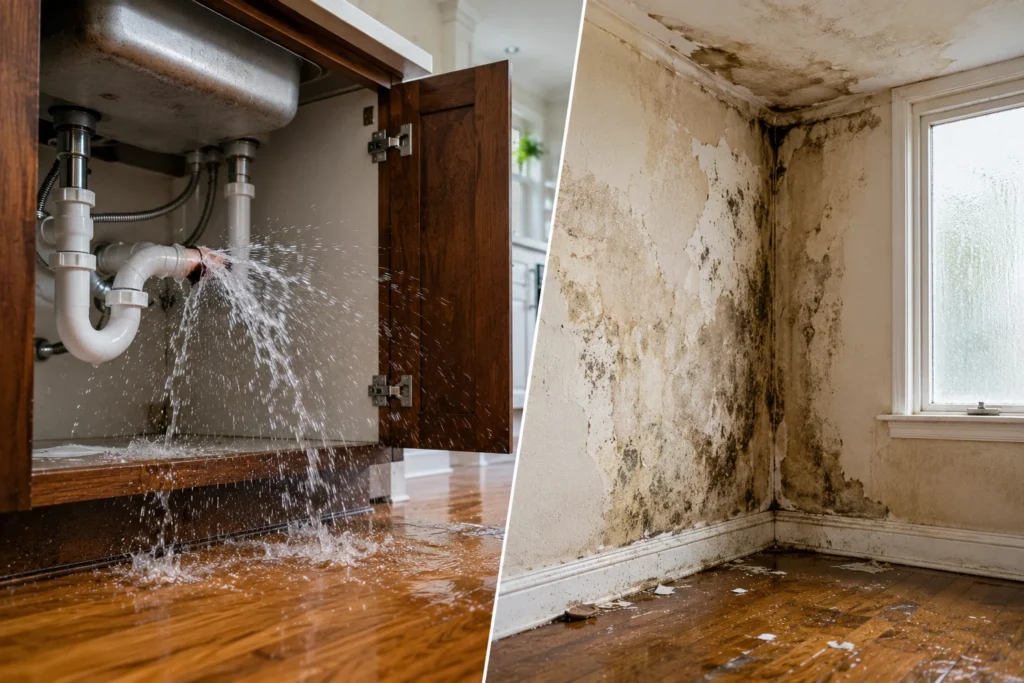
Visible water stains rarely tell the entire story. Water naturally follows the path of least resistance, moving through insulation, framing, drywall, flooring, and structural cavities long before obvious damage appears. A ceiling stain in one room may actually originate from a plumbing leak several feet away, while moisture beneath hardwood flooring can extend far beyond the visibly damaged boards. Because water travels in unpredictable ways, professional inspections frequently reveal damage that homeowners never suspected existed. This hidden movement explains why repairs often expand after demolition begins.
Areas Where Concealed Moisture Commonly Develops
Some parts of a home are especially vulnerable because they remain hidden during normal daily life.
Common locations include:
- Behind drywall
- Beneath hardwood flooring
- Under ceramic tile
- Inside ceiling cavities
- Around plumbing penetrations
- Behind kitchen cabinets
- Inside bathroom vanities
- Crawl spaces
- Attics beneath roof leaks
- Around window framing
These concealed spaces create ideal conditions for moisture to accumulate without immediate detection. Routine inspections and early intervention remain the best defense against expensive structural repairs.
Mold Often Becomes a Secondary Problem
Water damage rarely stops with wet building materials. When moisture remains trapped inside walls, flooring, or insulation, mold may begin developing in a relatively short period under favorable conditions. Once microbial growth begins, restoration often becomes significantly more complicated.
Professional drying is designed to reduce this risk by removing excess moisture before mold has an opportunity to spread. Dehumidifiers, air movers, moisture meters, and thermal imaging equipment all play important roles during the drying process. Insurance coverage for mold varies considerably depending on the policy language, the cause of the original water damage, and whether reasonable mitigation efforts were taken after discovery.
What Homeowners Should Do Immediately After Discovering Water Damage
The first several hours after discovering water damage are often the most important. Decisions made during this period can influence both repair costs and the overall insurance claim.
A practical response includes:
- Stop the water source if it is safe to do so.
- Turn off electricity in affected areas when necessary.
- Remove valuable belongings from standing water.
- Photograph every damaged area before cleanup begins.
- Contact a professional mitigation company if extensive drying is required.
- Notify the insurance company promptly.
- Keep damaged materials until instructed otherwise.
- Save receipts for emergency repairs and temporary living expenses.
These actions demonstrate that reasonable steps were taken to protect the property from further damage, something many homeowners insurance policies specifically require.
Organizing Documentation From the Beginning
Strong documentation tells the complete story of the loss. Instead of relying on memory weeks later, homeowners should organize every piece of information related to the incident.
Consider creating a dedicated claim file containing:
| Document | Purpose |
| Photographs | Records the original condition of the damage |
| Videos | Captures active leaks and water movement |
| Plumbing reports | Identifies the source of the leak |
| Moisture readings | Documents hidden water intrusion |
| Contractor estimates | Supports repair costs |
| Mitigation invoices | Demonstrates prompt emergency response |
| Personal property inventory | Documents damaged belongings |
| Receipts | Verifies out-of-pocket expenses |
Keeping everything organized allows important information to be located quickly if questions arise during the claim.
Why Professional Inspections Add Value
Although homeowners can document visible damage themselves, some conditions require specialized equipment and experience. Moisture meters identify damp building materials that appear dry on the surface. Thermal imaging cameras reveal hidden moisture behind walls and ceilings. Leak detection equipment helps locate plumbing failures without unnecessary demolition.
Professional inspectors also evaluate structural conditions, determine how water traveled throughout the building, and estimate the full scope of repairs. These findings frequently become valuable evidence during insurance investigations, particularly when there is disagreement regarding Sudden vs Gradual Water Damage.
Looking Beyond Water Damage Alone
Property insurance claims often involve multiple types of damage occurring during the same event. A severe storm, for example, may produce roof damage, broken windows, interior water intrusion, and damaged personal belongings simultaneously. Homeowners sometimes compare these situations with Cosmetic vs Functional Hail Damage when trying to understand why insurers distinguish between visible appearance and actual structural impairment. Although hail claims involve different policy provisions, both examples demonstrate how insurance companies evaluate the underlying cause of damage rather than relying solely on what is immediately visible.
Why Thorough Documentation Strengthens Every Claim
Whether the loss results from a burst water line or a concealed plumbing leak, documentation remains one of the homeowner’s greatest assets. Clear photographs, detailed inspection reports, moisture mapping, repair estimates, maintenance records, and written communication all contribute to a stronger claim file. They help establish a reliable timeline, reduce misunderstandings, and provide objective evidence throughout the adjustment process.
Understanding Sudden vs Gradual Water Damage is only part of protecting your financial interests. Equally important is preserving evidence that accurately reflects the condition of the property from the moment the damage is discovered. In the final section, we’ll examine the most common reasons water damage claims are denied, discuss situations where gradual water damage may still qualify for coverage, explain how public adjusters assist homeowners during complex claims, and conclude with practical strategies for preventing future water damage.
Common Reasons Water Damage Claims Are Denied
Receiving a denial or reduced settlement can be frustrating, especially when the damage appears obvious. However, insurance companies do not evaluate claims based solely on the amount of visible destruction. They examine the cause of the loss, the policy language, the condition of the property before the incident, and the evidence provided during the investigation. Understanding Sudden vs Gradual Water Damage helps homeowners recognize why some claims are approved quickly while others require additional review.
Several factors commonly lead to denied or partially denied water damage claims.
These include:
- Long-term leakage
- Wear and tear
- Deferred maintenance
- Mold exclusions
- Delayed reporting
- Insufficient documentation
- Failure to protect the property after discovering the damage
- Policy exclusions
- Incomplete inspections
- Lack of evidence establishing the cause of loss
A denial should never be viewed as the final word without carefully reviewing the explanation. In some situations, providing additional documentation or correcting factual misunderstandings may help clarify the circumstances surrounding the claim.
Why Maintenance Records Can Make a Difference
Routine maintenance may not seem important until a claim is filed. Insurance adjusters often review whether homeowners took reasonable steps to maintain plumbing systems, roofing materials, appliances, and other components that could contribute to water damage. Although homeowners cannot prevent every plumbing failure, demonstrating consistent maintenance shows that the property was responsibly cared for.
Helpful records include:
- Annual plumbing inspections
- Water heater servicing
- Roof maintenance invoices
- Appliance replacement records
- HVAC maintenance reports
- Pipe replacement receipts
- Leak repair documentation
These records help establish that the homeowner acted responsibly before the loss occurred.
Can Gradual Water Damage Still Be Covered?
Many homeowners are surprised to learn that gradual water damage is not automatically excluded under every insurance policy. Some policies provide limited coverage when a hidden plumbing leak could not reasonably have been discovered during normal homeownership. Others may distinguish between repairing the failed plumbing component itself and repairing the resulting water damage to surrounding building materials.
For example, a pipe hidden inside a wall may develop a concealed leak that remains completely invisible until drywall begins showing stains months later. Depending on the policy language, portions of the resulting damage may qualify for coverage even if replacing the worn pipe itself does not. Every policy is different. That is why homeowners should carefully review their coverage instead of assuming either approval or denial before the investigation has been completed.
Understanding the Difference Between the Failed Part and the Resulting Damage
One aspect of water damage claims frequently causes confusion. Insurance policies sometimes separate the plumbing component that failed from the damage that escaping water caused afterward.
For instance, replacing an aging supply valve that simply wore out over time may not be covered because normal deterioration is generally considered a maintenance issue. However, cabinets, drywall, flooring, insulation, or personal belongings damaged by escaping water could receive different consideration depending on the circumstances of the loss. Understanding this distinction allows homeowners to evaluate settlement offers more accurately and ask informed questions during the adjustment process.
Building a Strong Insurance Claim
Preparation begins long before the insurance company arrives. The strongest claims typically share one characteristic: organized documentation. Homeowners who maintain records and respond quickly after discovering water damage often have an easier time demonstrating exactly what occurred.
A well-prepared claim file may include:
- A written timeline of events
- Time-stamped photographs
- Videos showing active water intrusion
- Plumbing inspection reports
- Emergency mitigation invoices
- Moisture mapping documentation
- Contractor repair estimates
- Personal property inventories
- Receipts for emergency expenses
- Copies of all correspondence with the insurer
When these documents work together, they provide a detailed history of the loss that is far more persuasive than relying on memory alone.
How a Public Adjuster Can Assist During Complex Claims
Some water damage claims are relatively straightforward. Others involve disputed causes, multiple inspections, hidden structural damage, or disagreements regarding repair costs. In these situations, homeowners may choose to work with a public adjuster.
Unlike insurance company adjusters, public adjusters represent the policyholder. Their responsibilities may include reviewing policy provisions, documenting the full extent of damage, preparing repair estimates, organizing supporting evidence, and communicating directly with the insurance company throughout the claims process.
Professional representation can be particularly valuable when:
- Coverage has been questioned.
- Hidden damage continues to expand.
- Settlement offers appear incomplete.
- Multiple contractors disagree on repair scope.
- Structural damage is discovered after demolition.
- The claim involves significant financial losses.
For many homeowners in Mansfield, obtaining an independent assessment provides additional confidence during complicated insurance negotiations.
Communication Helps Keep Claims Moving
Documentation alone is not enough. Consistent communication also plays a major role in keeping a claim on track. Homeowners should save emails, document telephone conversations, confirm important discussions in writing, and respond promptly whenever additional information is requested.
Maintaining a written claim diary can also be helpful. Recording inspection dates, contractor visits, conversations with adjusters, and repair milestones creates a chronological history that may prove valuable if questions arise later. Simple organization often prevents unnecessary delays and misunderstandings.
Preventing Future Water Damage
Although no homeowner can eliminate every risk, routine maintenance significantly reduces the likelihood of major water losses. Consider adding these preventative measures to your regular home maintenance schedule:
| Preventive Measure | Benefit |
| Inspect plumbing annually | Identifies aging components before failure |
| Replace aging supply hoses | Reduces burst pipe risk |
| Check roofs after severe storms | Detects leaks early |
| Clean gutters and downspouts | Improves water drainage |
| Monitor household water pressure | Reduces stress on plumbing |
| Install automatic leak detection devices | Provides early warning of leaks |
| Inspect caulking around windows and tubs | Prevents moisture intrusion |
| Service HVAC systems annually | Reduces condensation-related problems |
Preventive maintenance protects not only the home itself but also helps reduce the likelihood of future insurance disputes involving Sudden vs Gradual Water Damage.
Technology Is Making Leak Detection Smarter
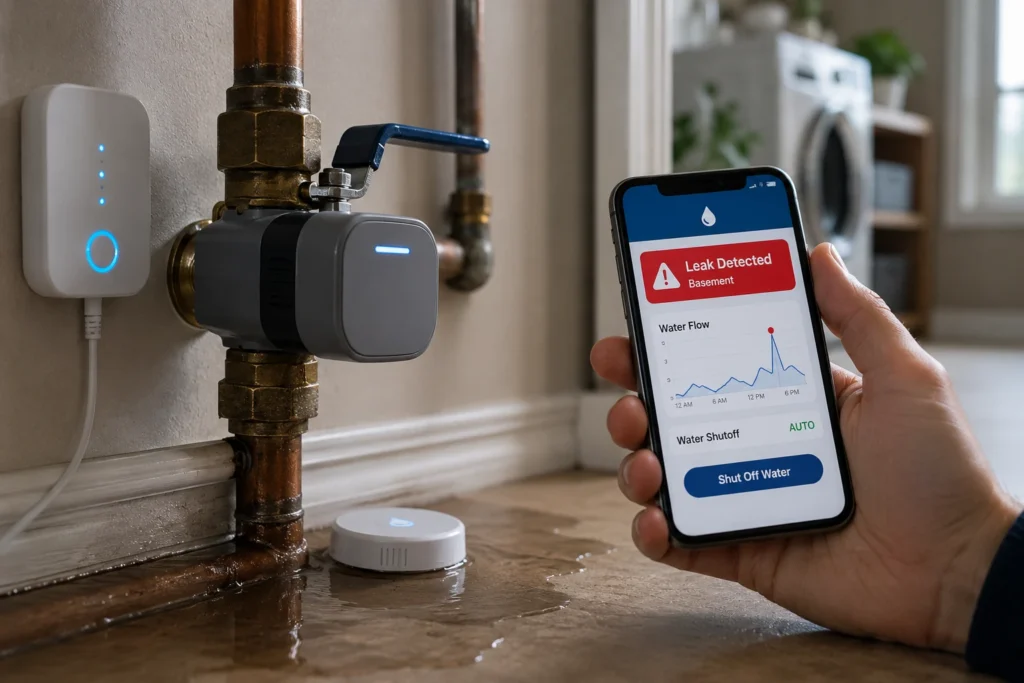
Modern technology has made it much easier for homeowners to detect water problems before they become major insurance claims. Smart leak detection systems can monitor water flow around the clock, identify unusual usage patterns, and send alerts directly to a homeowner’s smartphone when something appears abnormal.
Some advanced systems go even further by automatically shutting off the home’s main water supply if continuous water flow suggests a burst pipe or significant plumbing failure. While these devices cannot prevent every loss, they can dramatically reduce the amount of water released before someone discovers the problem. For homeowners who travel frequently or own rental or seasonal properties, smart monitoring systems provide an additional layer of protection. Investing in early detection is often far less expensive than repairing extensive structural damage after a major leak.
Frequently Overlooked Costs After Water Damage
Many homeowners focus on repairing damaged drywall, flooring, or cabinets because those problems are immediately visible. However, water losses often create additional expenses that are easy to overlook during the early stages of a claim. Industrial drying equipment, for example, may need to operate continuously for several days. Air movers and commercial dehumidifiers increase electricity usage while removing moisture from structural materials. Those utility costs may seem small at first, but they can become significant during larger restoration projects.
Temporary housing expenses also deserve careful attention. If portions of the home become unsafe during repairs, homeowners may need hotel accommodations, meals, laundry services, transportation, or even pet boarding. Depending on the policy, some of these expenses may fall under additional living expense coverage. Storage costs represent another hidden expense. Furniture, electronics, artwork, and personal belongings often need to be moved into secure storage while contractors replace flooring, drywall, insulation, or cabinetry. Professional movers, storage facilities, packing supplies, and transportation all contribute to the overall financial impact of the loss.
Demolition is another area where expenses frequently increase. Removing saturated drywall, damaged insulation, warped flooring, and contaminated building materials requires labor, debris removal, and disposal fees before reconstruction can even begin. Personal belongings should never be overlooked. Clothing, furniture, electronics, family photographs, important documents, books, and decorative items may all require professional cleaning, restoration, or replacement. Creating a complete inventory with photographs, approximate purchase dates, and estimated replacement costs helps support this portion of the insurance claim. These secondary expenses demonstrate why homeowners should never judge the severity of Sudden vs Gradual Water Damage based only on what they can immediately see. Hidden damage often extends beyond the visible areas and may require additional repairs as restoration progresses.
Every Water Damage Claim Is Unique

No two water damage claims unfold exactly the same way. Two neighboring homes may experience similar plumbing failures yet receive different insurance outcomes because their construction materials, maintenance histories, policy language, and documented evidence differ. Even when the visible damage appears similar, the underlying cause of the loss can significantly influence how the claim is evaluated.
This is why homeowners should avoid comparing their claim directly to someone else’s experience. Instead, focus on gathering accurate documentation, preserving evidence, and understanding the specific terms of your own insurance policy.
Reviewing Your Policy Before an Emergency Happens
Most homeowners only read their insurance policy after discovering damage. By then, stress levels are already high, and important decisions must often be made quickly.
Reviewing your policy before an emergency occurs provides a better understanding of:
- Water damage coverage
- Policy exclusions
- Deductibles
- Duties after a loss
- Reporting requirements
- Additional living expense provisions
- Mold limitations
- Optional endorsements
Knowing these provisions ahead of time helps homeowners respond more confidently and avoid unnecessary confusion during the claims process.
Understanding How Moisture Travels Through Building Materials
Water rarely remains where it first enters a structure. It can migrate through porous materials by a process known as capillary action, allowing moisture to spread into framing, drywall, insulation, masonry, and flooring even against the force of gravity. Understanding this principle helps explain why hidden damage is often much more extensive than visible staining alone.
Final Thoughts
Understanding Sudden vs Gradual Water Damage is about much more than learning insurance terminology. It is about recognizing how the cause of a loss influences inspections, documentation requirements, repair planning, and claim outcomes. Homeowners who understand these differences are often better prepared to respond quickly, preserve evidence, and communicate effectively throughout the insurance process. Whether water damage results from a burst pipe, a concealed plumbing leak, an appliance failure, or a combination of factors, thorough documentation remains one of the most valuable tools available. Photographs, maintenance records, mitigation reports, repair estimates, and written timelines all help establish the facts and support a well-documented claim.
Preparation also extends beyond the claim itself. Routine plumbing inspections, roof maintenance, smart leak detection devices, and regular monitoring of vulnerable areas can reduce the likelihood of significant water damage in the future. Small preventative measures today often prevent much larger repair projects tomorrow. For homeowners in Mansfield, understanding the difference between Sudden vs Gradual Water Damage can make a meaningful difference when navigating the insurance claims process. By acting promptly, maintaining organized records, and seeking qualified guidance whenever questions arise, property owners place themselves in a stronger position to protect both their homes and their financial interests when unexpected water damage occurs.
FAQs
Sudden water damage happens unexpectedly, while gradual water damage develops slowly over time due to ongoing leaks or moisture exposure.
Many homeowners insurance policies cover sudden and accidental water damage, but coverage depends on the policy’s terms, exclusions, and the cause of the loss.
Gradual damage may be considered the result of wear and tear, poor maintenance, or long-term leakage, which many policies exclude from coverage.
Sometimes. If the leak was concealed and could not reasonably have been discovered, certain policies may provide coverage for the resulting damage.
Stop the water source if it’s safe, document the damage with photos and videos, mitigate further damage, and notify your insurance company as soon as possible.
Keep detailed documentation, including photographs, repair estimates, plumbing reports, mitigation invoices, and receipts for all related expenses.
It can. Coverage for mold varies by policy and often depends on what caused the moisture and whether prompt mitigation occurred.
No. If possible, keep damaged materials until the insurance company or restoration professionals advise that they can be discarded.
A public adjuster may be helpful if your claim is large, disputed, underpaid, or involves complex damage that requires extensive documentation.
Regular plumbing inspections, roof maintenance, replacing aging water supply lines, and installing smart leak detection devices can significantly reduce the likelihood of costly water damage.