
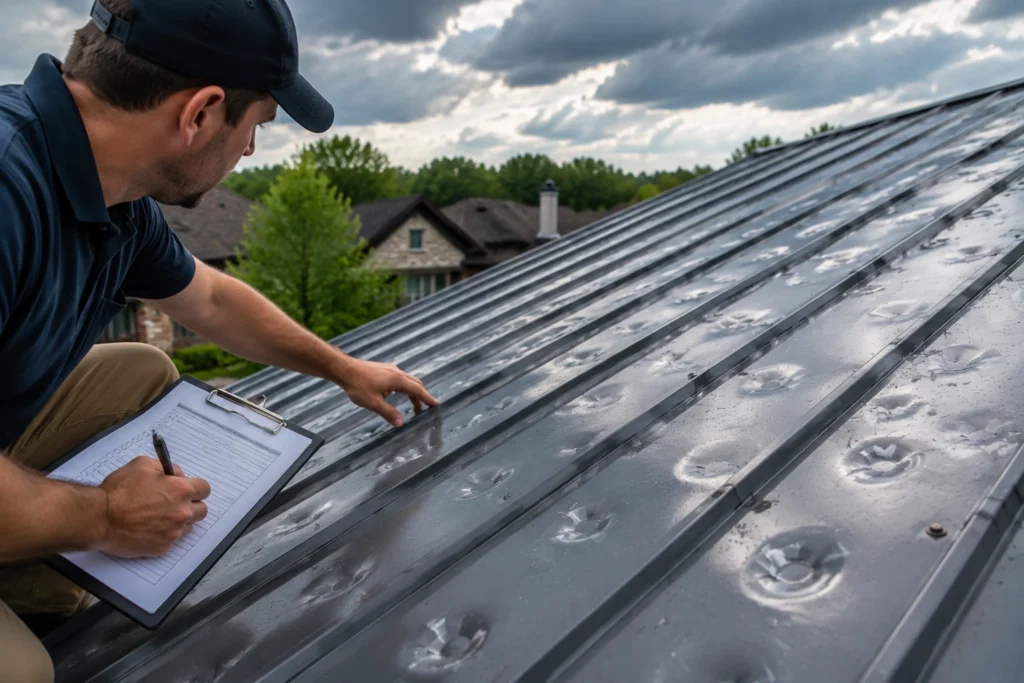
Hailstorms don’t negotiate. They arrive fast, hit hard, and leave homeowners trying to make sense of what just happened. When a metal roof is involved, the confusion usually gets worse, not better. The big question shows up immediately: will insurance pay hail damage metal roof? It’s the same question I hear repeatedly from homeowners in Mansfield, especially after severe spring and summer storms roll through. The answer isn’t simple, but it is understandable once you break it into real-world pieces instead of insurance jargon. Let’s walk through it step by step, like you’re standing on the ground looking up at your roof right now.
Metal Roofs Handle Hail Differently Than People Expect
Metal roofs have a strong reputation. And for good reason. They outperform many traditional roofing systems in wind and fire resistance. But hail is a different kind of stress test. A hailstone doesn’t just “hit” a roof. It transfers energy on impact. That energy has to go somewhere.
Common outcomes include:
- Surface dents (light to moderate hail)
- Coating disruption (paint or protective layer damage)
- Fastener stress points loosening over time
- Minor seam separation in older systems
Now here’s the twist. Most metal roofs don’t fail immediately after hail. That’s exactly why insurance companies get cautious. Because if a roof still functions, they often question whether it qualifies for payment under will insurance pay hail damage metal roof claims or whether it falls into cosmetic-only territory.
Insurance Coverage Isn’t About Damage Alone
One of the biggest misconceptions homeowners have is this: damage equals payout. That’s not how insurers think. They focus on functionality, not appearance.
So the real evaluation usually comes down to:
- Does the roof still prevent water intrusion?
- Are seams and joints still intact?
- Is the protective coating compromised enough to reduce lifespan?
If the answer is “no functional impact,” insurers often push back on the claim. This is where policy language becomes critical. Because even when damage is visible, coverage depends on how the policy defines it. And this is why the question will insurance pay hail damage metal roof doesn’t have a universal answer it depends on interpretation as much as impact.
Policy Types Change Everything
Not all insurance policies are built the same. Two homeowners can experience the same storm and get completely different outcomes.
Here’s a simplified breakdown:
| Policy Type | How It Pays | Impact on Hail Claims |
| Replacement Cost Value (RCV) | Pays full repair/replacement minus deductible | Higher chance of full coverage |
| Actual Cash Value (ACV) | Pays depreciated value | Lower payout, especially for older roofs |
| Cosmetic Exclusion Policy | Excludes appearance-only damage | Often denies dent-only claims |
This is why reading the fine print matters more than the storm itself. And yes, it directly influences whether will insurance pay hail damage metal roof becomes a yes or a denial.
How Adjusters Actually Evaluate Metal Roof Damage
When an adjuster arrives, they’re not just “looking around.” They follow a process.
They typically assess:
- Dent depth and spread pattern
- Coating integrity (paint or protective layer)
- Structural seams and flashing
- Evidence of leaks or moisture entry
- Roof age and installation quality
Sometimes they bring engineers into the process, especially if the claim is large or disputed. At that point, documentation becomes everything. Because interpretation varies, even among professionals.
When Confusion Starts: Coverage Uncertainty Explained
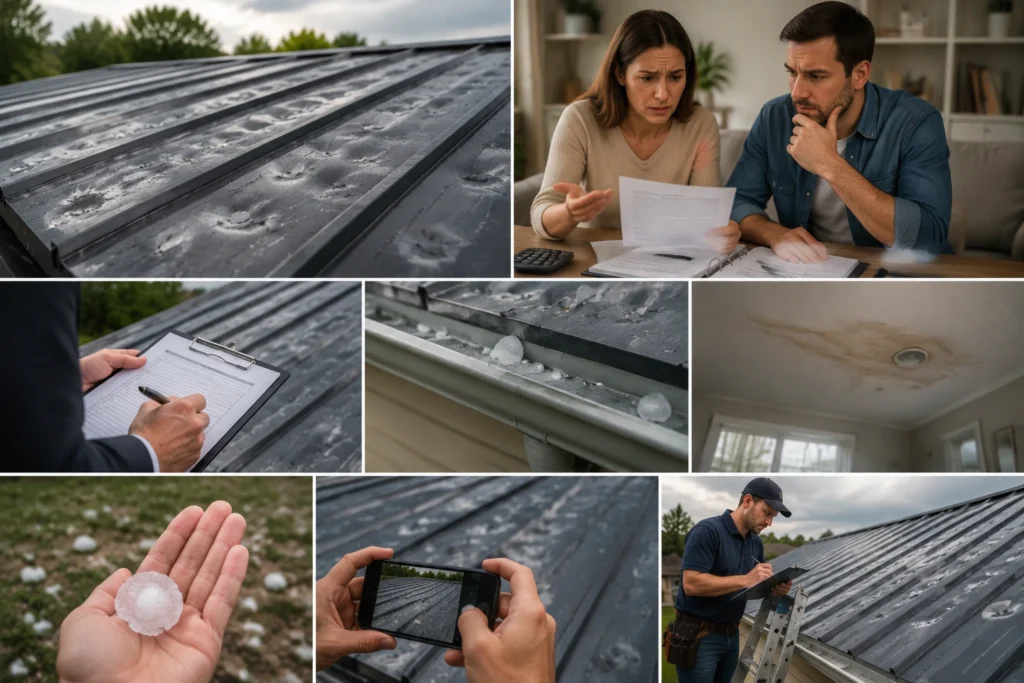
At this stage, homeowners often begin searching for clarity in simple terms. One of the most common questions that arises is Does Insurance Cover Old Hail Damage and the answer is rarely straightforward.
Older hail impacts are harder to prove because insurers require a clear connection between storm date and visible damage. Without documentation or weather verification, claims weaken quickly. That doesn’t mean older damage is never covered it just means the burden of proof increases significantly. This is where timing, photos, and inspection reports become just as important as the roof itself.
Why Claims Get Denied More Often Than Homeowners Expect
Denials usually don’t happen because there is no damage. They happen because the insurer interprets the damage differently.
The most common denial reasons include:
- Damage labeled as cosmetic only
- No functional impairment found
- Pre-existing wear and tear
- Missing or weak documentation
- Delay in reporting the storm
Insurance companies also rely heavily on policy exclusions. If cosmetic damage is excluded, dents alone may not qualify. This is where many homeowners feel stuck. Because the roof looks damaged but the policy says otherwise. And that gap is exactly where disputes begin.
What Homeowners Should Do Immediately After Hail in Mansfield
If a storm just passed through Mansfield, timing becomes your biggest advantage.
Here’s what actually helps:
- Take wide and close-up roof photos (from safe angles)
- Document gutters, siding, and soft metals too
- Check ceilings and attic spaces for leaks
- Avoid temporary repairs before inspection unless necessary
- Contact a professional roof inspector quickly
Why quickly? Because delays create doubt. And doubt weakens claims. Even a few weeks can shift how insurers interpret the origin of damage.
Building a Strong Insurance Claim That Holds Up
A strong claim is not emotional. It is structured.
The most successful claims include:
- Professional inspection reports with measurements
- Weather data confirming hail event dates
- High-resolution photographic documentation
- Contractor repair or replacement estimates
- Maintenance and roof history records
Think of it as storytelling with evidence. Every piece supports the next. And when it’s done right, the question will insurance pay hail damage metal roof becomes far more likely to end in approval.
Why Evidence Quality Matters More Than Damage Severity
Two roofs can look identical after a hailstorm. One gets approved. One gets denied. The difference is almost always documentation clarity.
Insurance adjusters rely heavily on measurable impact, not emotional reasoning. That means:
- Clear dent mapping matters
- Consistent photo angles matter
- Correlation with storm data matters
Without these, even legitimate damage can be dismissed.
Understanding Material Behavior in Impact Events
To understand why metal roofs behave the way they do after hail, it helps to look at material response science. In engineering, plasticity (physics) describes how materials permanently deform under stress rather than returning to their original shape. Metal roofing systems often exhibit this behavior during hail events. Instead of cracking or breaking like brittle materials, they absorb impact through deformation. That’s why dents appear instead of fractures.
Insurance adjusters often interpret this behavior differently depending on whether deformation affects function or is purely surface-level. This scientific distinction often influences whether a claim tied to will insurance pay hail damage metal roof results in compensation or denial.
Repair vs Replacement: What Usually Happens Next
Once damage is confirmed, the next question becomes: repair or full replacement?
Insurers consider:
- Total surface area affected
- Cost of partial repair vs full replacement
- Availability of matching materials
- Long-term performance risk
Metal roofs complicate this decision because matching panels after years of weather exposure is not always possible. So even moderate hail damage can sometimes lead to full replacement approval if functionality or appearance consistency is compromised.
Strengthening Your Position Before Filing a Claim
Before submitting anything, preparation matters.
Here’s what strengthens your position immediately:
- Get a licensed roofing inspection
- Collect storm verification reports
- Avoid selective or partial documentation
- Keep communication records with insurers
- Do not discard damaged materials prematurely
This creates a structured evidence chain that supports your claim logically.
The Role of Contractors and Independent Assessments
Contractors often see damage differently than insurance adjusters. That difference is not conflict—it’s perspective.
A contractor focuses on:
- Long-term roof performance
- Water intrusion risk
- Replacement feasibility
Adjusters focus on:
- Policy compliance
- Immediate functional impairment
- Cost evaluation
When both reports align, claims move faster. When they don’t, disputes begin.
Mansfield Weather Reality and Roof Risk Patterns
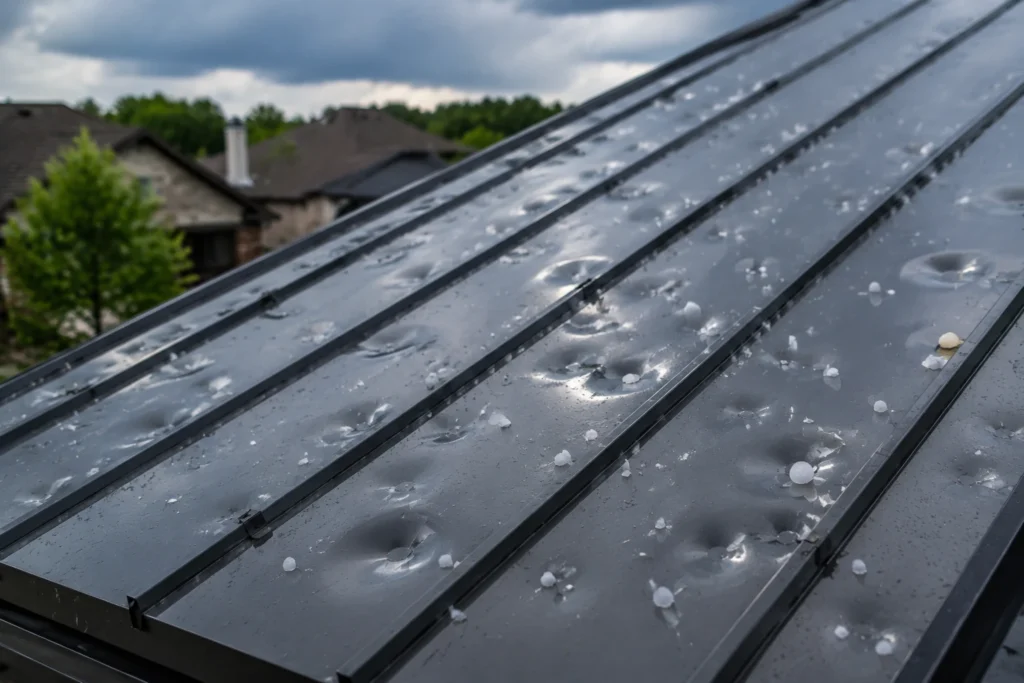
Storm activity in Mansfield is not random. Seasonal hail events tend to cluster, which means multiple claims often overlap in timing and geography. This increases scrutiny from insurers because they see patterns not isolated incidents.
That makes documentation even more important for homeowners in the area. When insurers process multiple claims from the same storm system, they rely heavily on consistency and proof. This is also why understanding will insurance pay hail damage metal roof in a local context matters more than general advice.
Prevention and Long-Term Protection Strategies
You can’t stop hail, but you can reduce future disputes and damage severity.
Smart steps include:
- Upgrading to impact-rated metal systems
- Scheduling yearly roof inspections
- Keeping pre-storm condition photos
- Applying protective coatings when recommended
- Maintaining gutters and drainage systems
These steps don’t just protect the roof they protect your claim credibility.
Final Thoughts: What Really Determines the Outcome
At the end of the day, insurance decisions come down to three things: policy wording, damage classification, and evidence strength. So when homeowners ask again and again, will insurance pay hail damage metal roof, the real answer is this: it depends on how clearly you can prove functional loss, not just visible impact.
For homeowners in Mansfield, where hailstorms are part of the seasonal reality, preparation is not optional it’s strategic. And when the process feels unclear or the insurer’s interpretation doesn’t match what you see on your roof, that’s often the moment where professional support changes everything. Because in insurance claims, clarity wins. Every time.
FAQs
Yes, but only if the damage affects the roof’s function, not just its appearance. Cosmetic dents are often excluded.
Functional damage includes issues like leaks, seam separation, or coating failure that impact the roof’s ability to protect the home.
Most denials happen because the damage is classified as cosmetic or pre-existing wear rather than storm-related functional damage.
No, insurance only pays when hail damage reduces the roof’s performance or violates policy-covered conditions.
They inspect dents, coating integrity, seams, and check for any signs of water intrusion or structural compromise.
Small dents are often considered cosmetic and may not be covered unless your policy specifically includes cosmetic damage protection.
Document the damage, take photos, avoid repairs, and schedule a professional inspection as soon as possible.
Extremely important clear photos, inspection reports, and storm records can determine whether your claim is approved or denied.
It’s possible, but harder. You must prove the damage is linked to a specific storm event within your policy timeline.
Yes, they can interpret policy language, document damage properly, and negotiate with insurers for a stronger settlement.